Top 10 Property Management Software for Student Housing in 2026
February 23, 2026

Quick Summary
Student housing operations require specialized software beyond basic multifamily capabilities. This guide reviews 10 property management platforms designed for bed-level leasing, roommate matching, parent portals, and academic calendar cycles. Compare features, pricing, and implementation requirements to find the right solution for your student housing portfolio.
Shortlist
Why Does Student Housing Need Specialized Software?
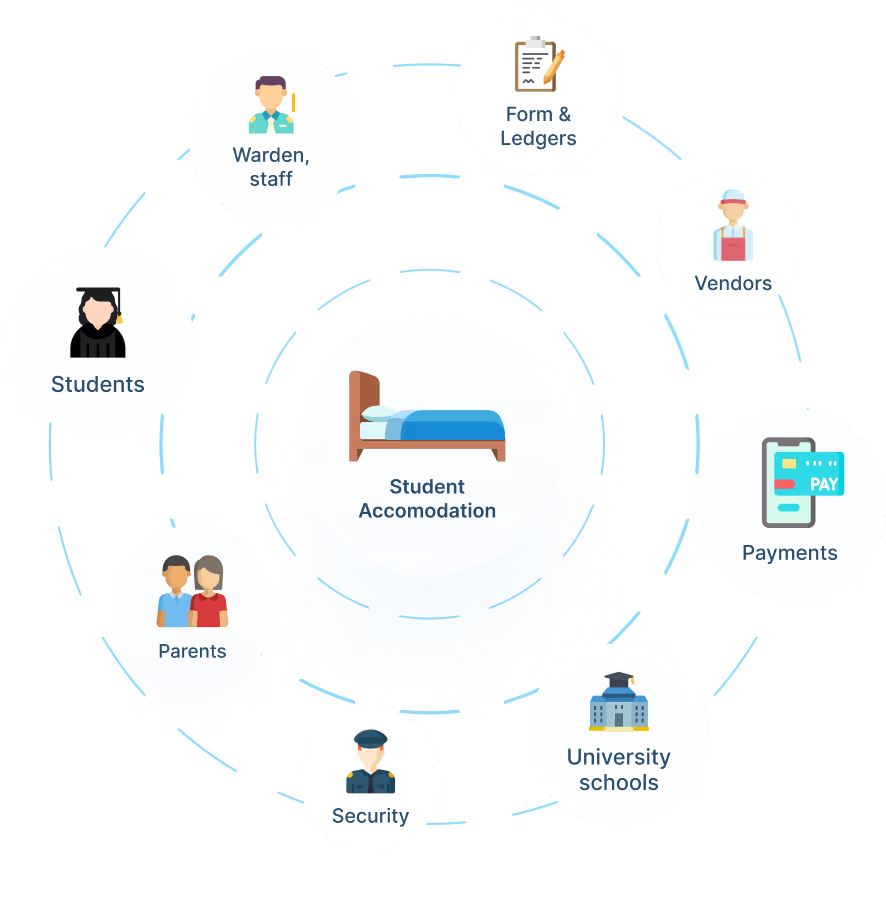
Student housing operates differently from traditional multifamily properties. You're managing individual bed assignments within shared units, coordinating hundreds of simultaneous move-ins around academic calendars, handling parent guarantors alongside student tenants, and processing semester-based payment plans that don't align with standard monthly rent cycles.
Generic property management software can't handle these complexities. You need platforms built for bed-level leasing, roommate matching algorithms, parent portal access, and academic calendar integration.
This Revela guide reviews 10 solutions designed specifically for student housing operations, helping you choose the right platform for your portfolio size and operational needs.
Why Listen to Us?
At Revela, we've built property management software for operators managing complex portfolios, including student housing. Our platform handles bed-level leasing, parent guarantor management, and the accounting complexities unique to student housing. All are built on the reconciled ledger foundation that makes our real-time reporting trustworthy.
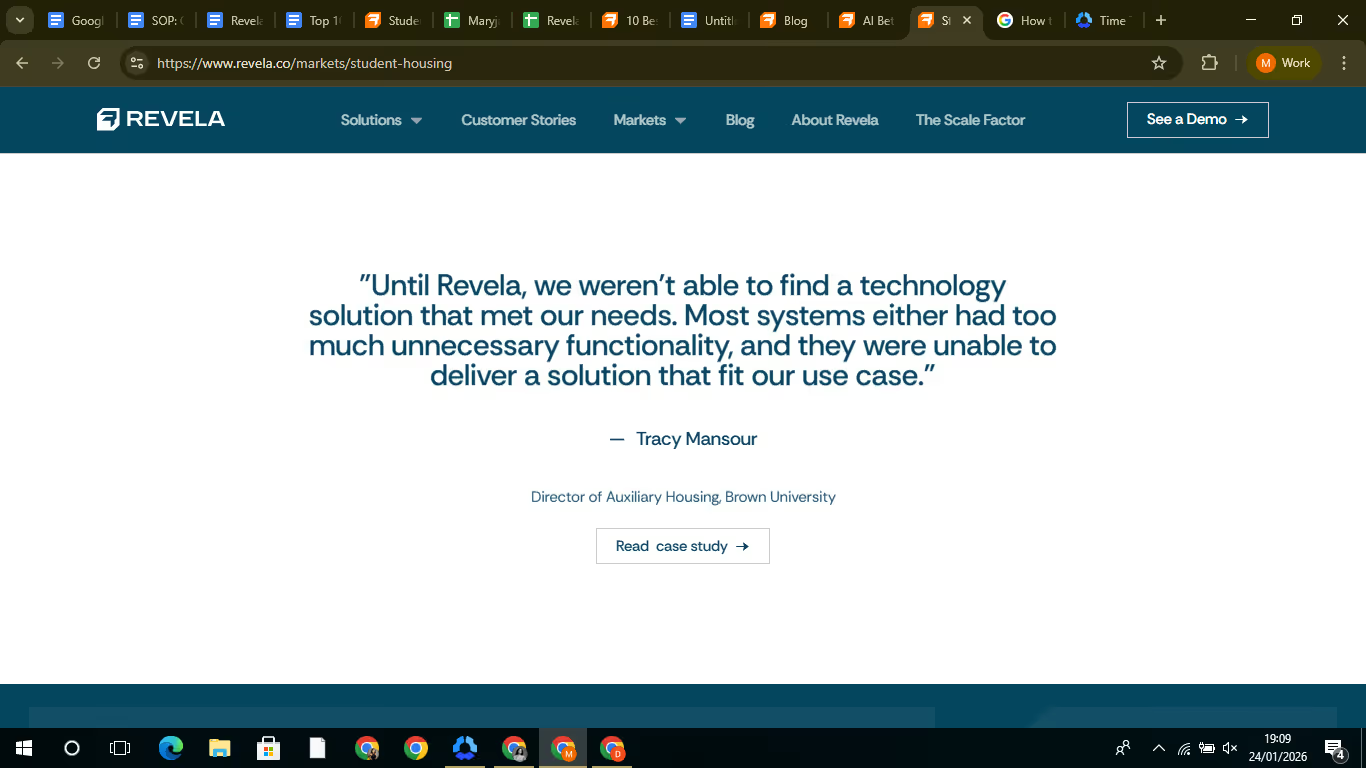
For Brown University, Revela eliminated manual processes, accelerated resident workflows, and powered complex programs like the Visiting Scholar initiative.
What is Student Housing Property Management Software?
Student housing property management software handles operational requirements that generic multifamily platforms can't address. These systems manage individual bed assignments within shared units, coordinate roommate pairings based on compatibility preferences, provide separate portals for parent guarantors, align lease terms with academic calendars, and process semester-based payment plans.
These platforms centralize bed availability, roommate changes, parent communication, bulk renewals, and high-volume move-ins. Purpose-built systems automate workflows that generic tools struggle with. This includes roommate assignments, parent payments, academic lease cycles, and complex student housing finances.
Key Features for Student Housing Software
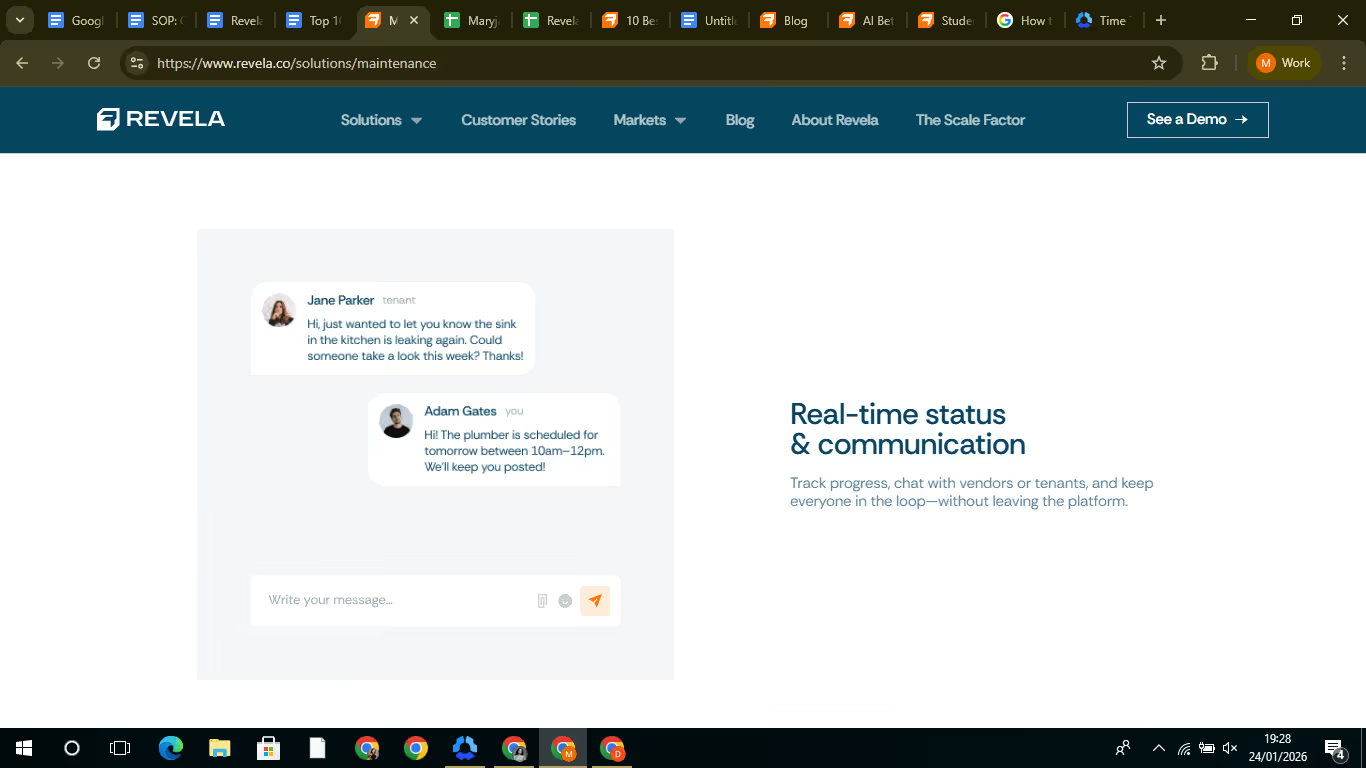
Student housing platforms need capabilities that standard multifamily software lacks:
- Bed-Level Leasing: Tracks individual bed availability within shared units, not just whole apartments.
- Roommate Matching: Pairs compatible students based on preferences like sleep schedules and lifestyle habits.
- Parent Portals: Give guarantors separate access for payments and communication without student account access.
- Academic Calendar Integration: Aligns lease terms and renewals with semester dates instead of monthly cycles.
- Payment Plan Flexibility: Handles semester billing, monthly installments, and financial aid timing.
- Bulk Lease Management: Coordinates group leasing for entire properties or large blocks.
- High-Volume Move-In Coordination: Manages hundreds of simultaneous transitions during academic periods.
Break Maintenance Scheduling: Coordinates work during academic breaks when properties sit vacant.
Top 10 Property Management Software for Student Housing
1. Revela
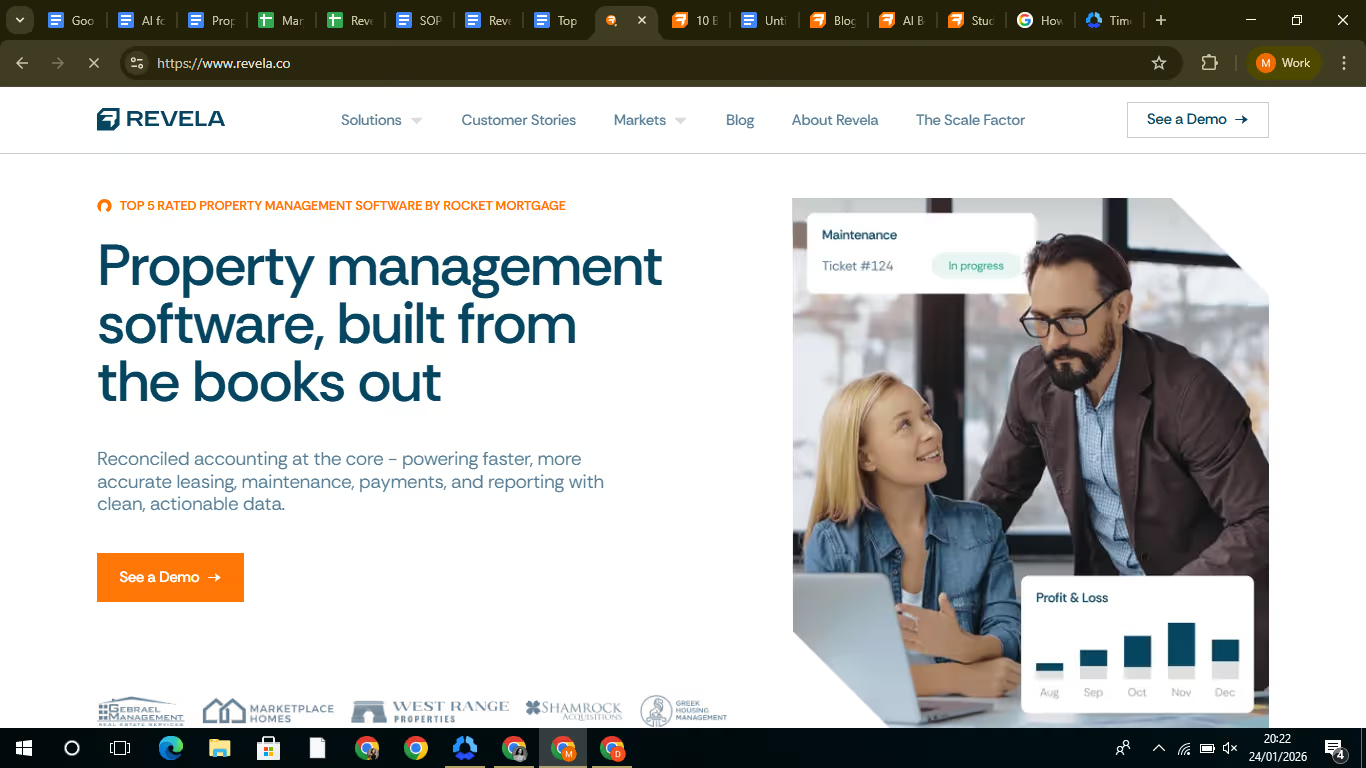
Revela delivers property management software built ledger-first with comprehensive student housing capabilities, including bed-level leasing, roommate assignments, parent portals, and academic calendar integration.
The platform's accounting foundation ensures accurate financial reporting for the complex revenue-recognition and trust-accounting requirements unique to student-housing operations.
Key Features
- Enterprise Trust Accounting: Handles complex student housing finances with automated reconciliation and compliance-ready reporting.
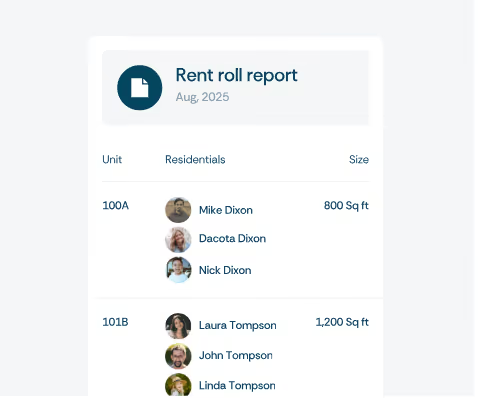
- Bed-Level Lease Management: Individual bed assignments with roommate grouping and compatibility tracking.
- Parent/Guarantor Portal: Separate access for payment processing, statement viewing, and property communication.
- Academic Calendar Integration: Semester-based lease terms, bulk renewals, and academic year payment cycles.
- Real-Time Portfolio Reporting: Live dashboards showing occupancy by bed, revenue by semester, and operational metrics.
Pricing
Custom based on bed count and features; free demo available.
Pros
- Accounting built specifically for student housing financial complexity
- Real-time reporting cuts month-end close time by 40-60%
- Handles both individual bed leases and bulk property agreements
- Parent portal reduces payment coordination and communication issues
- U.S. based support team with under 2-hour response times
Cons
- Platform complexity requires a dedicated learning period for accounting depth
Best for: Mid-market to enterprise student housing operators needing enterprise-grade accounting with student-specific workflows.
2. Entrata
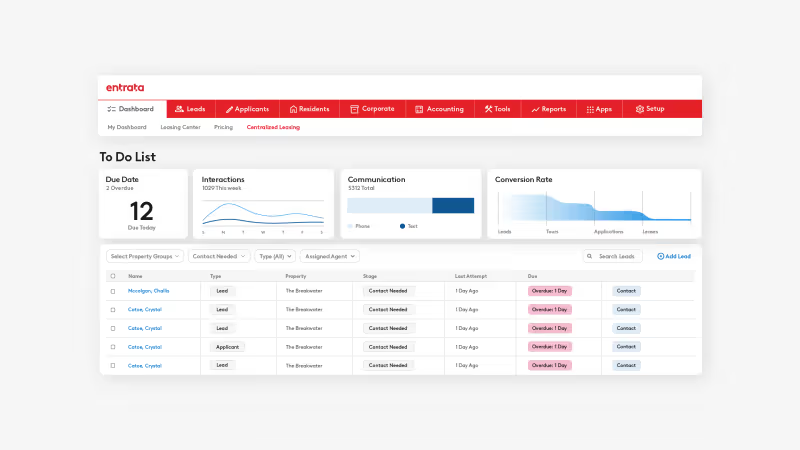
Entrata provides all-in-one property management with a specialized student housing module covering bed leasing, roommate matching, parent portals, and financial aid integration. The platform consolidates leasing, accounting, maintenance, and resident communication into a single system designed to handle the operational complexity of large student housing portfolios.
Key Features
- Student Housing Module: Purpose-built workflows for bed assignments, roommate matching, and academic cycles.
- Parent Payment Portal: Separate guarantor access for billing, statements, and property communication.
- ResidentAI Chatbot: 24/7 automated support for students and parents via conversational interface.
- Academic Calendar Tools: Semester-based lease terms with bulk renewal processing and academic year alignment.
- Financial Aid Integration: Direct connection to university payment systems and disbursement coordination.
Pricing
Custom based on bed count and modules selected.
Pros
- Comprehensive student housing capabilities in a unified platform
- Strong roommate matching algorithms based on compatibility preferences
- Financial aid integration reduces payment collection issues significantly
- Eliminates the need for multiple disconnected tools and systems
Cons
- Work orders from the dashboard canmalfunction and redirect to the wrong properties
- System occasionally doesn't deliver or receive text messages
- Slow customer support response (offshore/mixed teams)
- Complex implementation taking 8-12 weeks minimum
Best for: Large student housing operators needing a unified platform with extensive student features.
3. Yardi (Voyager Student Housing)
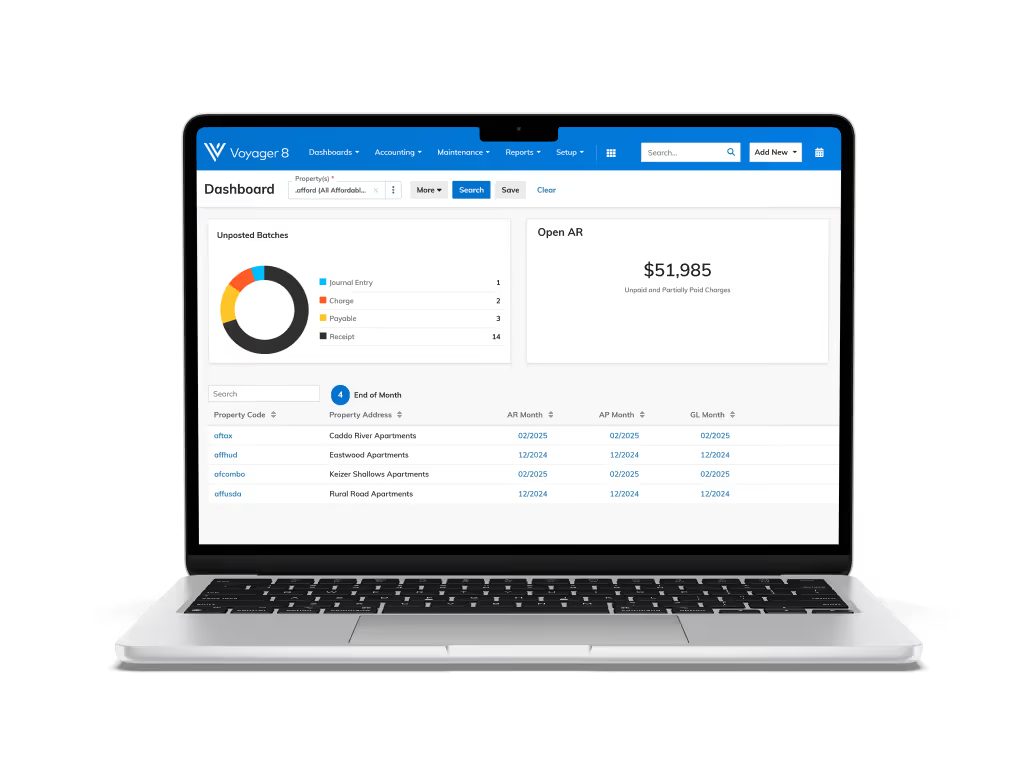
Yardi Voyager Student Housing delivers enterprise-grade property management designed for large student housing operators and universities with comprehensive accounting, leasing, and compliance features. The platform handles the most complex student housing operations, including university-owned properties, mixed-use portfolios, and institutional reporting requirements.
Key Features
- Bed/Space Management: Individual bed leasing with flexible room configurations and assignment tracking.
- Institutional-Grade Accounting: Complex trust accounting, financial reporting, and budget management for universities.
- Parent/Guarantor Management: Separate portal access and billing capabilities for guarantors.
- Semester Lease Cycling: Academic calendar-aligned lease terms, renewals, and payment schedules.
- Compliance Tracking: FERPA compliance, university reporting requirements, and regulatory documentation.
Pricing
Custom enterprise pricing; contact sales for a quote.
Pros
- Handles the largest and most complex student housing portfolios successfully
- Strong compliance and reporting capabilities for university requirements
- Comprehensive financial features meet institutional accounting standards
- Proven track record with major institutional operators nationwide
Cons
- Support techs can be inconsistent
- Takes 2+ months to learn the system comfortably
- Implementation 12-16 weeks minimum
Best for: Institutional and university-owned student housing portfolios.
4. RealPage (Student)
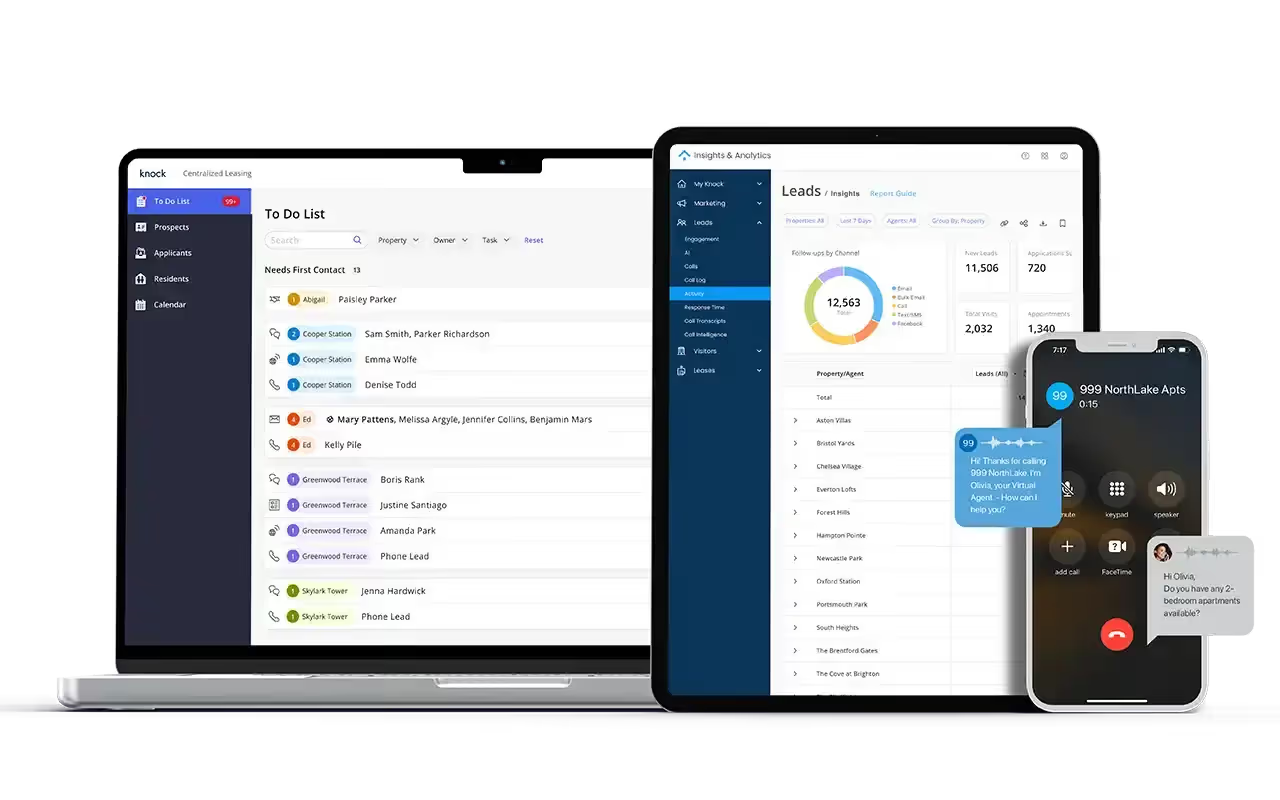
RealPage Student delivers property management with specialized student housing features, including bed leasing, roommate matching, and student-specific revenue management tools. The platform emphasizes data-driven pricing optimization and marketing automation designed for competitive student housing markets.
Key Features
- Student-Specific Leasing: Bed-level assignments with roommate preferences and compatibility matching.
- Dynamic Pricing for Student Housing: Optimizes rates by bed type, semester timing, and market demand.
- Parent Portal Access: Guarantor payment processing and communication capabilities.
- Bulk Lease Management: Group leasing coordination for entire properties or large blocks.
- Student Marketing Tools: Targeted digital advertising optimized for college demographics.
Pricing
Custom based on bed count and modules selected.
Pros
- Revenue optimization algorithms proven to increase student housing income
- Strong marketing and leasing tools for competitive markets
- Handles complex bed assignment scenarios and roommate changes
- Integrates across broader RealPage product suite
Cons
- Declining customer service quality reported by users
- Difficulties handling rental prepayments and move-outs
- Best suited for larger portfolios with 500+ beds minimum
- Requires investment in RealPage ecosystem for full value realization
Best for: Mid-market to enterprise student housing with revenue optimization focus.
5. ResMan (Student Housing Module)
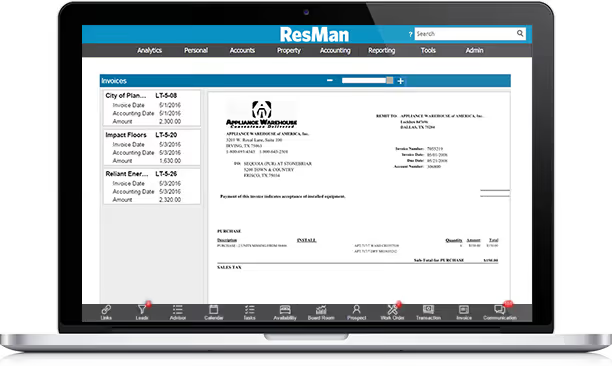
ResMan offers property management with a dedicated student housing module covering bed leasing, parent portals, and academic calendar integration at competitive pricing. The platform balances essential student housing features with accessible implementation and ongoing costs for mid-market operators.
Key Features
- Bed-Level Leasing: Individual bed assignments within shared units with availability tracking.
- Roommate Matching Tools: Compatibility-based pairing algorithms using student preferences.
- Parent/Guarantor Portal: Separate access for payment responsibility and communication.
- Academic Calendar Support: Semester-based lease terms and bulk renewal processing.
- Student Maintenance Coordination: Work order management during breaks and semester transitions.
Pricing
Quote-based, depending on features, contact sales for pricing.
Pros
- More affordable pricing than enterprise competitors like Yardi and Entrata
- Solid student housing feature set covers essential operational needs
- Easier implementation process typically completed in 6-10 weeks
- Responsive customer support with reasonable response times
Cons
- Reporting lacks the customization depth of Yardi/Entrata
- Less suitable for university-owned properties
- Accounting is less sophisticated than Revela or Yardi
- Mobile app has basic functionality only
Best for: Growing student housing operators needing an affordable and comprehensive platform.
6. AppFolio (Limited Student Features)
AppFolio provides general property management with some student housing capabilities, better suited for operators managing mixed student and conventional properties rather than dedicated student housing portfolios. The platform offers strong basic functionality but lacks specialized student housing features available in purpose-built platforms.
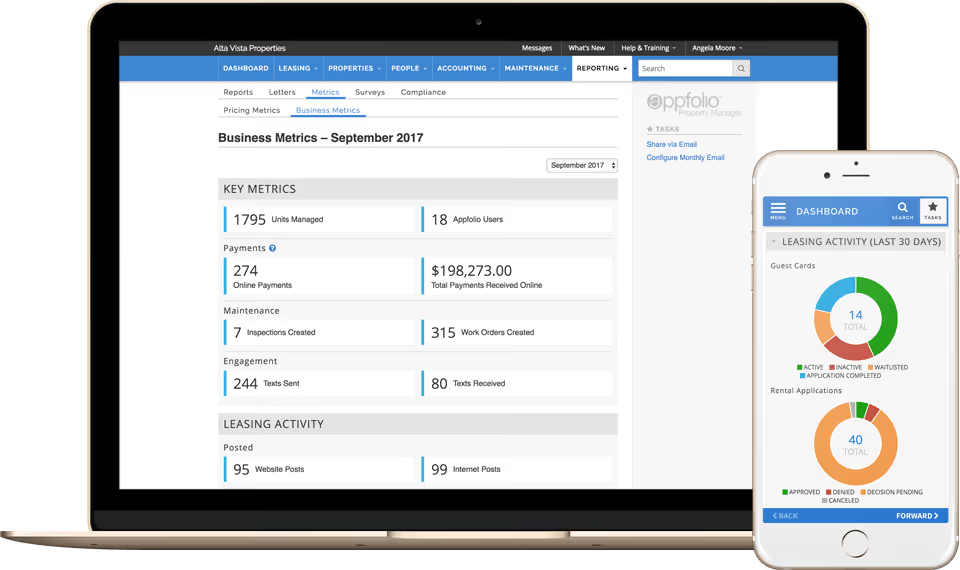
Key Features
- Basic Bed Leasing: Room-level assignments with limited bed-by-bed management.
- Online Leasing Platform: Digital applications, screening, and e-signature capabilities.
- Parent Co-Signer Support: Basic guarantor functionality for lease agreements.
- Lisa AI Leasing Assistant: 24/7 automated prospect communication and inquiry handling.
- Mobile Property Management: Strong field operations app for maintenance and inspections.
Pricing
Custom pricing; scales with unit/bed count.
Pros
- Lower entry cost than specialized student housing platforms
- Quick implementation timeline of 3-4 weeks
- Intuitive interface requires minimal staff training
- Strong mobile app supports field team operations effectively
Cons
- AI assistant (Lisa) costs extra on the premium tier
- No dedicated roommate matching functionality or algorithms
- Basic parent portal capabilities lack depth for complex scenarios
- Not designed for academic calendar lease cycles and semester terms
Best for: Small student housing operators or mixed portfolios.
7. StarRez
StarRez delivers comprehensive housing management software designed specifically for university housing operations, including residence halls, apartments, and campus living facilities. The platform handles complex university requirements, including housing assignments, meal plans, conference housing, and institutional reporting.
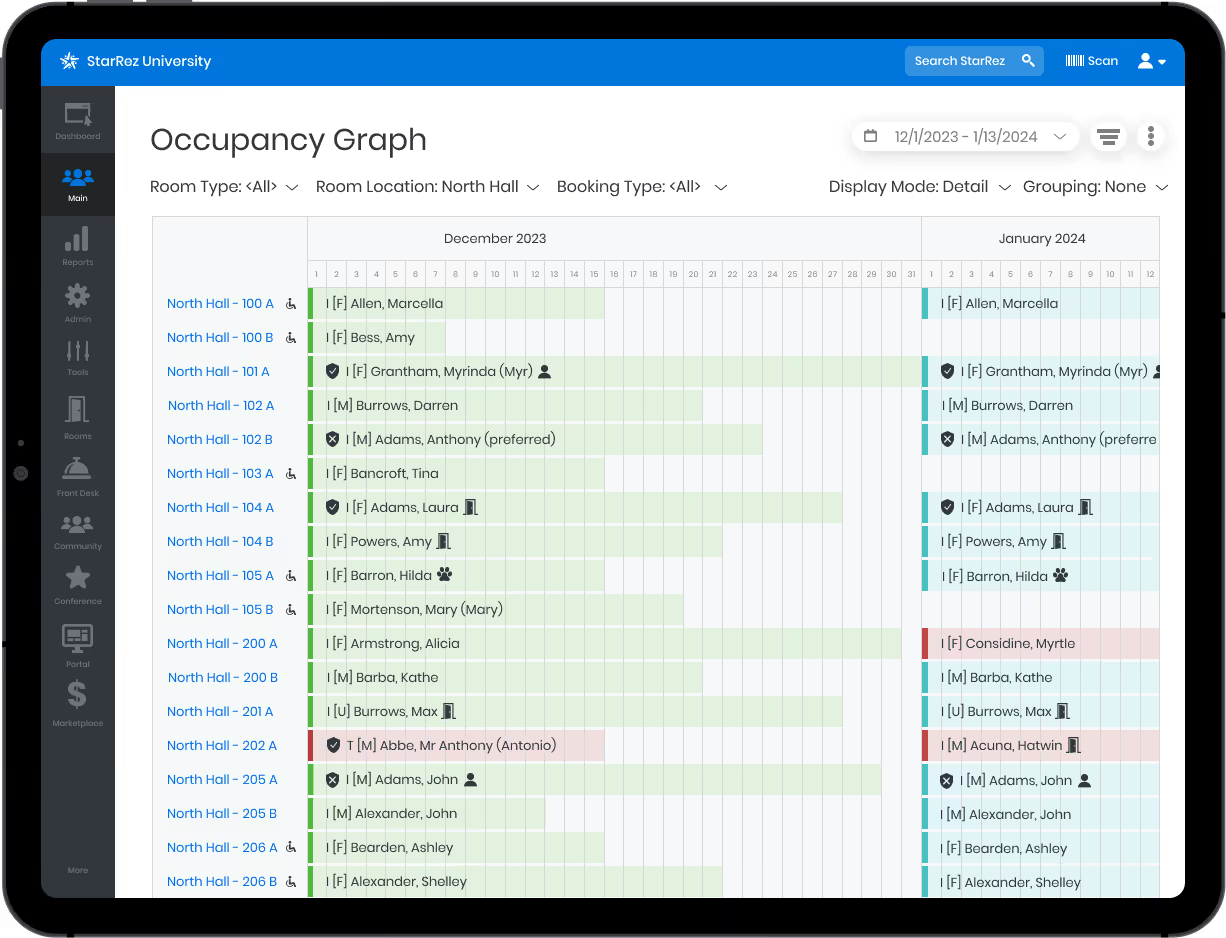
Key Features
- Housing Assignment Management: Room and bed assignments integrated with university enrollment systems.
- Meal Plan Integration: Coordinates housing with dining services and meal plan billing.
- Conference and Summer Housing: Manages seasonal housing for camps, conferences, and summer programs.
- Student Information System Integration: Direct connection to university SIS platforms (Banner, PeopleSoft, Workday).
- Institutional Compliance Reporting: FERPA compliance, accreditation reports, and university analytics.
Pricing
Custom enterprise pricing based on bed count and university requirements.
Pros
- Purpose-built for university-owned housing operations
- Deep integration with university systems and processes
- Handles complex assignment rules and room selection processes
- Strong compliance and institutional reporting capabilities
Cons
- Designed for universities, not private student housing operators
- Less flexible for off-campus housing
- Interface design feels dated compared to modern platforms
Best for: University-owned housing and on-campus residence halls.
8. MRI Student Living
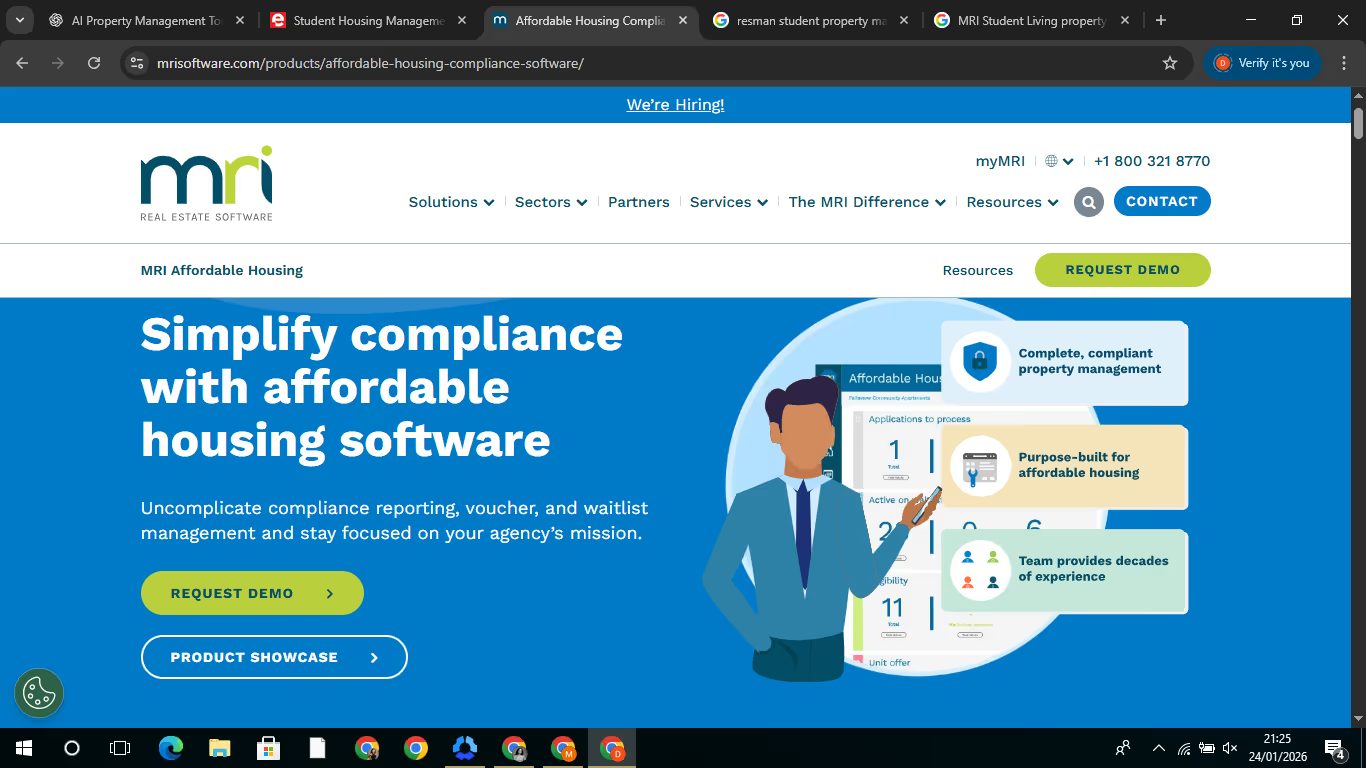
MRI Software offers a configurable student housing platform with strong integration capabilities and customizable workflows for complex operations. The platform suits organizations with unique requirements, technical resources for customization, and a need for deep integration with university systems.
Key Features
- Configurable Bed Management: Flexible bed and room assignment structures adaptable to unique layouts.
- Custom Lease Structures: Accommodates non-standard student housing lease terms and conditions.
- Parent Portal Capabilities: Guarantor access, communication, and payment processing.
- Open API Integration: Connects with university systems, financial aid, and third-party tools.
- Advanced Reporting: Customizable dashboards and reports tailored to specific operational needs.
Pricing
Custom enterprise pricing based on portfolio complexity and implementation scope.
Pros
- Highly customizable for unique operational requirements and workflows
- Strong integration capabilities with university systems and financial aid
- Handles complex organizational structures and reporting hierarchies
- Open API enables custom development and specialized integrations
Cons
- Implementation timeline can be lengthy at 10-14 weeks minimum
- Requires technical resources for configuration and ongoing customization
- Interface design is less modern than cloud-native platforms
- More expensive than mid-market options for similar bed counts
Best for: Large portfolios requiring high customization and integration capabilities.
9. Campus Advantage (CA Technologies)
Campus Advantage delivers student housing-specific property management with a deep focus on bed leasing, roommate matching, and student engagement. The platform targets operators managing exclusively student housing properties who need purpose-built features rather than adapted multifamily solutions.

Key Features
- Purpose-Built Student Platform: Designed exclusively for student housing operations from the ground up.
- Advanced Roommate Matching: Compatibility algorithms based on lifestyle preferences and habits.
- Student Engagement Tools: Events management, amenities booking, and community-building features.
- Parent Payment Portal: Dedicated guarantor access for billing and property communication..
- Financial Aid Integration: Direct connections to university payment and disbursement systems.
Pricing
Custom based on bed count, contact sales for a quote.
Pros
- Built specifically for student housing rather than adapted from multifamily
- Strong roommate matching capabilities using detailed compatibility factors
- Student engagement features enhance retention and community satisfaction
- Financial aid integration reduces payment collection issues significantly
Cons
- Smaller vendor with less market presence than enterprise competitors
- Integration ecosystem smaller than major enterprise platforms
- Accounting features are less robust than platforms like Revela or Yardi
- Best suited for operators focused exclusively on student housing
Best for: Purpose-built student housing needing a specialized platform.
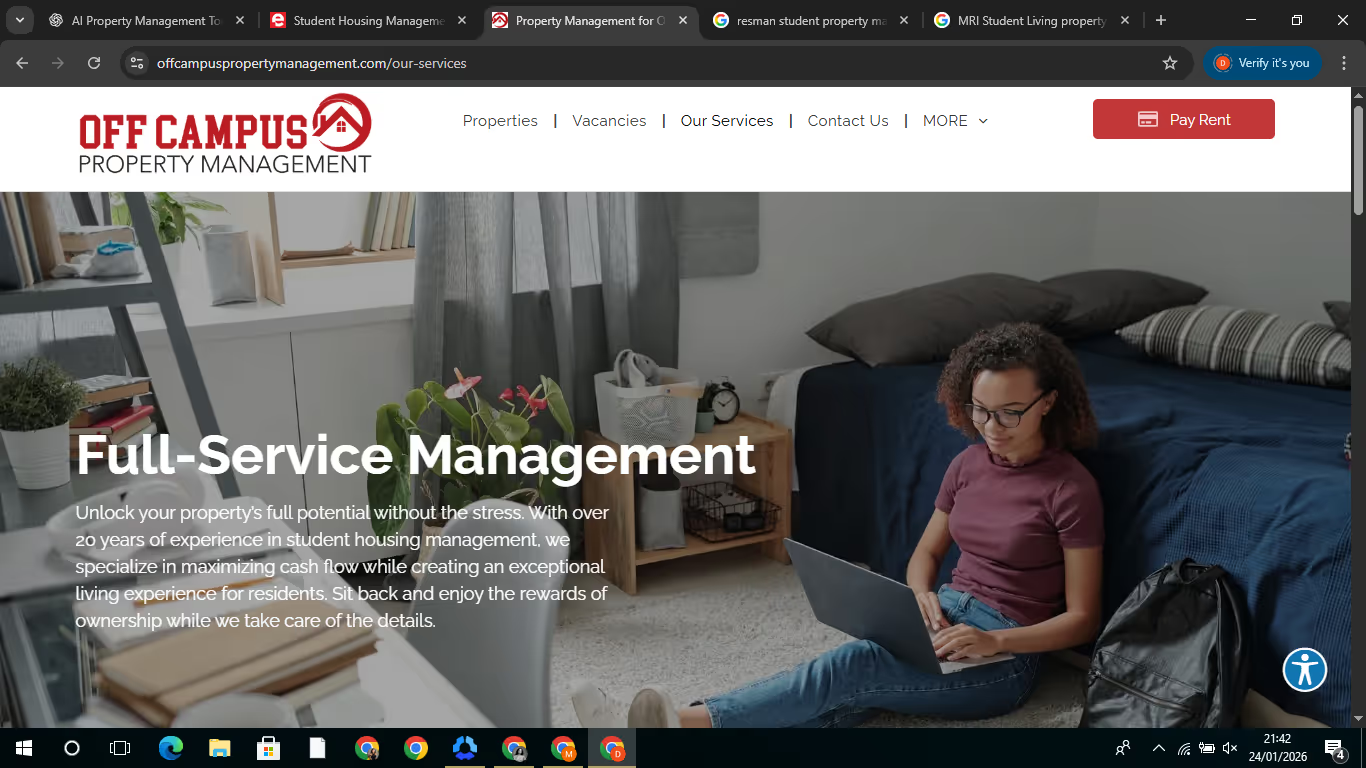
10. Occupy (formerly OffCampus)
Occupy specializes in off-campus student housing management with bed leasing, roommate matching, and student-focused marketing tools. The platform serves smaller operators and individual properties competing in off-campus markets where marketing and student acquisition drive success.
Key Features
- Bed-by-Bed Leasing: Individual bed assignments and real-time availability tracking.
- Roommate Matching Platform: Student-facing compatibility matching and preference tools.
- Student Marketing Tools: Social media integration and targeted digital advertising.
- Parent Portal Access: Guarantor payment processing and communication capabilities.
- Academic Calendar Integration: Semester-based lease management and renewal coordination.
Pricing
Custom pricing paid monthly, depending on features selected.
Pros
- Strong student-facing marketing capabilities for competitive off-campus markets
- Quick implementation timeline at 4-6 weeks
- Well-suited for an off-campus housing focus and marketing emphasis
- Transparent per-bed pricing model without hidden fees
Cons
- Accounting capabilities remain basic compared to enterprise platforms
- Limited to smaller portfolios under 500 beds effectively
- Integration ecosystem is smaller than major competitors
- Customer support capacity is limited compared to major vendors
Best for: Off-campus student housing and small to mid-market operators.
How to Choose Student Housing Software: 5 Critical Decisions
Before you sign a contract, evaluate these five strategic pillars to ensure your tech stack can handle the unique pressures of the academic calendar.
1. Match the Platform to Your Growth Plans
Many operators make the mistake of choosing a platform based on their current bed count. However, a platform that works for 150 beds may buckle under the complexity of 500. Since data migrations can take 6–12 months of staff time, don't choose a starter tool that you’ll outgrow by next semester. Choose a platform built to scale with your three-year growth plan to avoid the "migration tax."
2. Prioritize Accounting Over Feature Lists
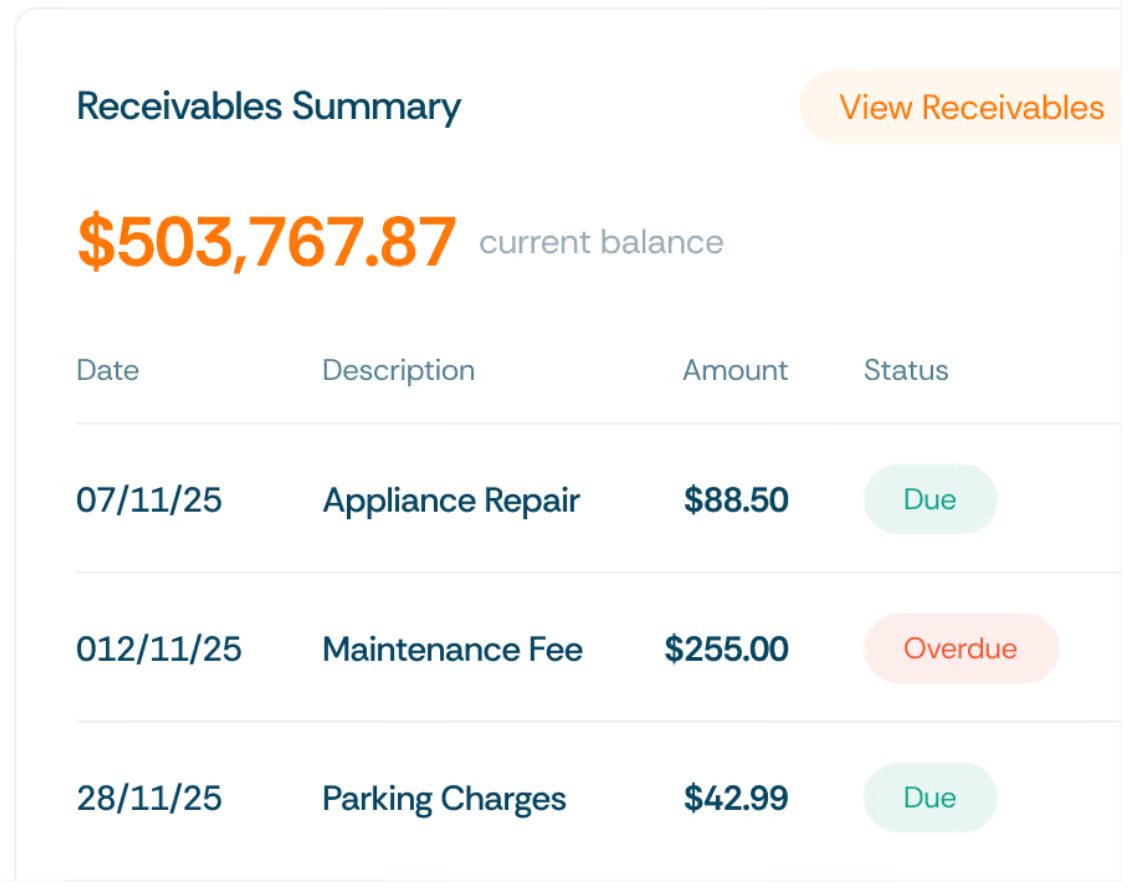
Student housing finances are significantly more complex than standard multifamily. You aren't just collecting rent; you’re managing individual security deposits by bed, tracking financial aid disbursement timing, and handling third-party parent payments. A feature-rich platform is useless if its accounting foundation can't reconcile these fragmented income streams with 100% accuracy.
3. Verify Actual Capabilities, Not Marketing
In the software world, "Student Housing Support" is often marketing-speak for "we added a co-signer field." True student software requires native bed-level leasing, automated roommate matching, and parent-specific portals. If a vendor cannot demo live bed assignments, mid-semester roommate swaps, or bulk semester renewals, the software will likely fail you during peak season.
4. Calculate the Real Total Cost of Ownership
A low monthly subscription fee is often a "loss leader" that hides massive implementation costs. When comparing vendors, ask for the all-in cost for Year 1 and Year 3, including data migration fees, mandatory training, and premium support tiers. Legitimate, scalable student platforms typically range from $3–$8 per bed monthly; anything significantly lower likely lacks the infrastructure to support your operations.
5. Weaponize the Academic Calendar
The timing of your implementation is just as important as the software itself. Never attempt a "go-live" during the academic year or near the fall move-in. The ideal window is May through July, allowing you to finalize the transition and conduct 30+ days of stress testing before hundreds of students arrive simultaneously in August.
Conclusion
Student housing requires specialized software handling bed-level leasing, roommate matching, parent portals, and academic calendar cycles that generic multifamily platforms cannot support. Choose your preferred software based on portfolio size, and you’ll discover that success depends more on timing and data than features.
Implement in May–July, clean records first, document workflows, and set realistic timelines. Ready to see how Revela handles student housing operations? Explore our student housing capabilities or book a demo to discuss your specific portfolio needs.
Frequently Asked Questions
What makes student housing software different from regular multifamily platforms?
Features such as bed-level leasing (not unit-level), roommate matching, parent portals, academic calendar cycles, and semester payment plans. Regular platforms lack these completely.
Can I manage student housing with regular property management software?
Basic operations work, but you'll lack roommate matching, bed assignments, parent access, and semester cycles—creating manual workarounds consuming hours weekly.
What's the single most critical feature for student housing?
Bed-level leasing. Without this, you cannot properly manage individual bed assignments, roommate changes, or mixed occupancy—the foundation of student housing operations.
Do I absolutely need parent portal functionality?
Yes, if parents serve as guarantors or make payments. Parent portals reduce coordination issues and provide the transparency parents expect when financially supporting students.
Can these platforms integrate with university financial aid systems?
Enterprise platforms (Yardi, Entrata, MRI) offer robust university integrations. Mid-market platforms vary significantly—verify capabilities before purchasing, not after.