10 Best AI Property Management Software Solutions in 2026
February 23, 2026

Quick Summary
AI property management software uses machine learning and automation to reduce errors, save time, and improve decision-making. This guide reviews 10 leading platforms, from Revela AI's exception detection to RealPage's revenue optimization. We highlight core features, pricing, pros and cons, and who the tool suits best. Feel free to explore our blog for more insights on property management.
Shortlist
AI Adoption Is Accelerating in Property Management
Property managers juggle accounting, leasing, maintenance, and communication. When workflows are manual and systems disconnected, errors and wasted time become the norm. AI property management software is becoming a competitive necessity rather than an experimental add-on.
Artificial intelligence offers relief. AI‑powered software automates trust accounting, catches coding mistakes in real time, and frees teams from repetitive tasks.
In this Revela guide, we review 10 AI property management platforms across accounting, leasing, maintenance, communication, and analytics. Helping you identify which tools deliver real ROI for your portfolio.
Why Listen to Us?
At Revela, we built AI on a reconciled ledger foundation, not as a chatbot layer. Revela AI monitors transactions in real time, flags exceptions automatically, and executes complex workflows because it understands your books and operations from the same source: your general ledger.
What Is AI Property Management Software?
While traditional automation follows "if-then" rules to handle repetitive tasks, AI property management software introduces an intelligence layer capable of judgment, learning, and pattern recognition. It doesn’t just execute instructions; it adapts to new data to handle complex exceptions that once required human intervention.
The impact of AI is driven by three core technological pillars:
- Predictive Analytics: Analyzes historical data and market trends to forecast maintenance failures, optimize dynamic rental pricing, and identify "at-risk" tenants before they give notice.
- Natural Language Processing (NLP): Powering generative AI "copilots" that draft resident communications, summarize unstructured lease documents, and manage 24/7 conversational chatbots.
- Computer Vision: Analyzes visual data to automate property inspections, verify applicant identities, and detect fraudulent listings across third-party marketplaces.
By moving beyond rigid workflows, AI transforms property management from a manual chore into a proactive, data-driven operation.
Why AI Property Management Matters
- Fix accounting errors: AI automates reconciliations and reporting, catching miscoded invoices and unpaid bills early.
- See performance instantly: Real-time dashboards show budgets, arrears, and occupancy without waiting for reports.
- Save time: Automates rent reminders, maintenance triage, and vendor assignments—cutting many manual steps to one.
- Scale with ease: Manage more units without more staff through consistent, automated workflows.
- Improve tenant experience: Faster responses and proactive maintenance boost satisfaction and save managers hours each week.
10 Best AI Property Management Software
1. Revela AI
Revela is an all‑in‑one property management platform focused on trust accounting and automated operations. Its AI beta integrates directly with the general ledger to surface insights and eliminate manual busywork.
Key AI Features
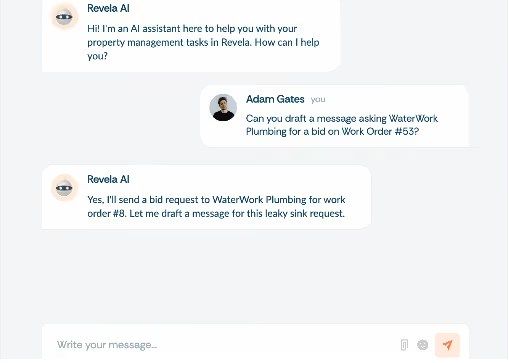
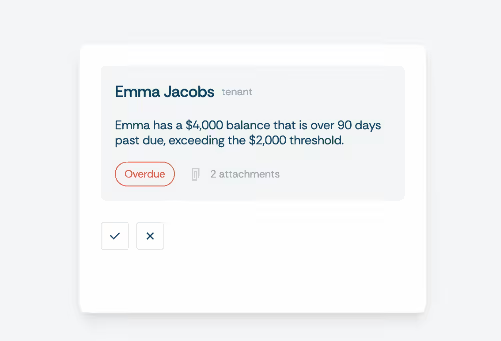
- Exception Detection: The system automatically flags unpaid bills, coding errors, duplicate invoices, and owner budget overruns.
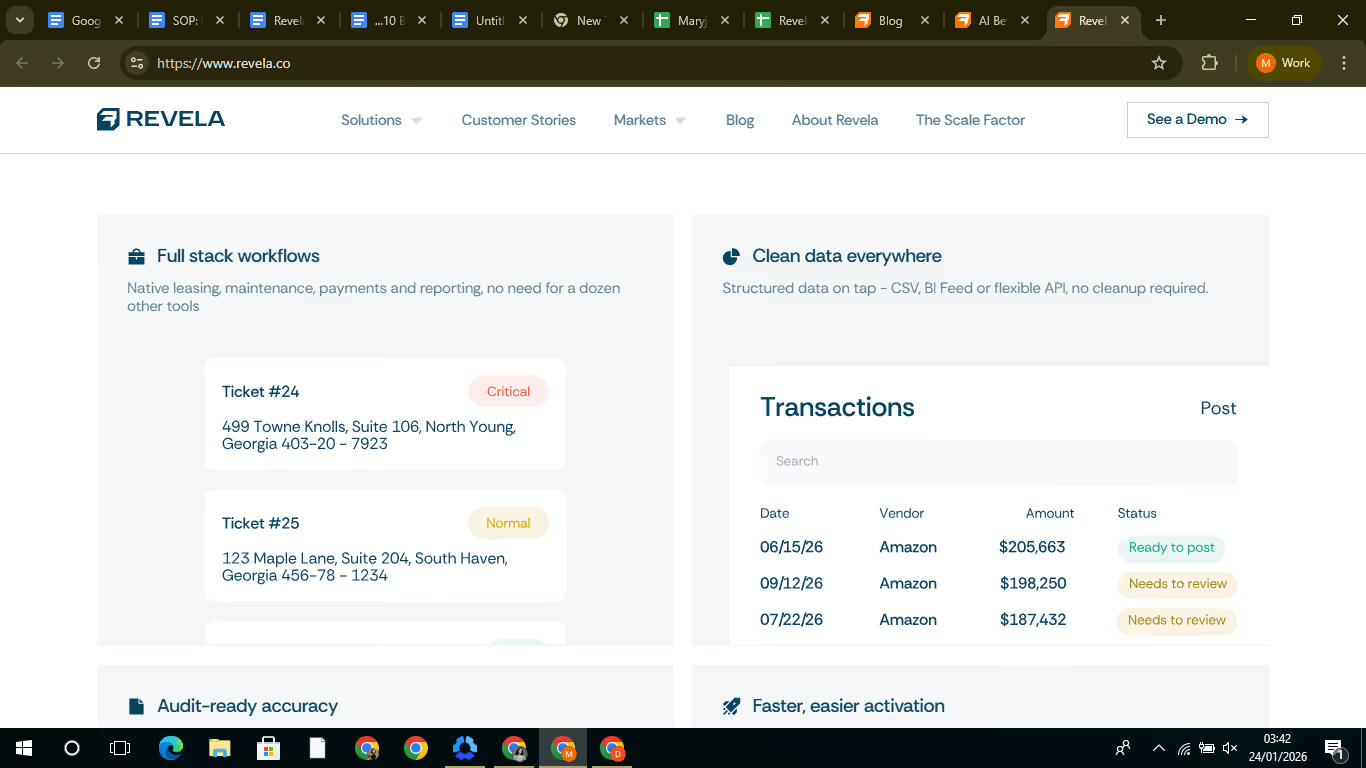
- Automated Task Execution: Common tasks, such as reassigning vendors, following up with prospects, and drafting tenant communications, are reduced from 20 steps to a single click.
- AI Chat Assistant: Ask “Which properties are over budget?” or “What’s my total payables?” and receive instant answers from live data.
- Smart Exception Alerts: The AI monitors books and operations in real time to catch miscoded expenses and budget overspending before they become problems.
- Predictive Budget Variance: Alerts when spending patterns indicate future overruns.
Pricing
Revela AI is in a custom‑pricing program. Feel free to schedule a demo for a quote.
Pros
- Deep trust accounting integration ensures accurate financial data
- Automated tasks save staff time and reduce errors
- Smart alerts catch exceptions early, protecting budgets
- AI chat assistant provides instant answers about budgets and payables
- Unified platform reduces the need for multiple disconnected tools
Cons
- AI is still in beta
Best for: Mid-market to enterprise operators needing exception detection and accounting-first AI
2. RealPage (AI Revenue Management)
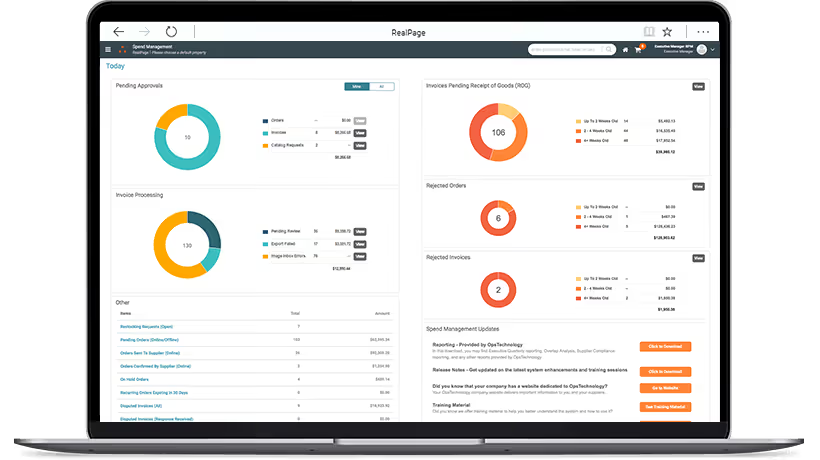
RealPage leads enterprise property management with YieldStar, its AI-powered revenue optimization engine. The platform analyzes local market data, seasonal patterns, competitor pricing, and unit-specific factors to recommend optimal rent prices that balance occupancy and revenue.
Key AI Features
- YieldStar Dynamic Pricing: Algorithm analyzes market conditions and recommends optimal rates.
- Predictive Occupancy Forecasting: Anticipates demand shifts based on historical patterns.
- Competitive Market Analysis: Monitors competitor pricing and adjusts recommendations.
- Automated Pricing Recommendations: Suggests increases when demand strengthens, concessions when risks rise.
- Demand-Based Optimization: Adjusts rates continuously as market conditions change.
Pricing
Custom enterprise pricing based on portfolio size and modules
Pros
- Proven revenue increases
- Deep market data across major metros
- Handles complex multi-property portfolios
- Integrates across the entire RealPage suite
- Strong institutional track record
Cons
- Implementation costs $50,000+ typically
- Steep learning curve for teams
- Overkill for portfolios under 1,000 units
- Interface feels dated compared to newer platforms
Best for: Enterprise portfolios requiring dynamic pricing optimization
3. AppFolio
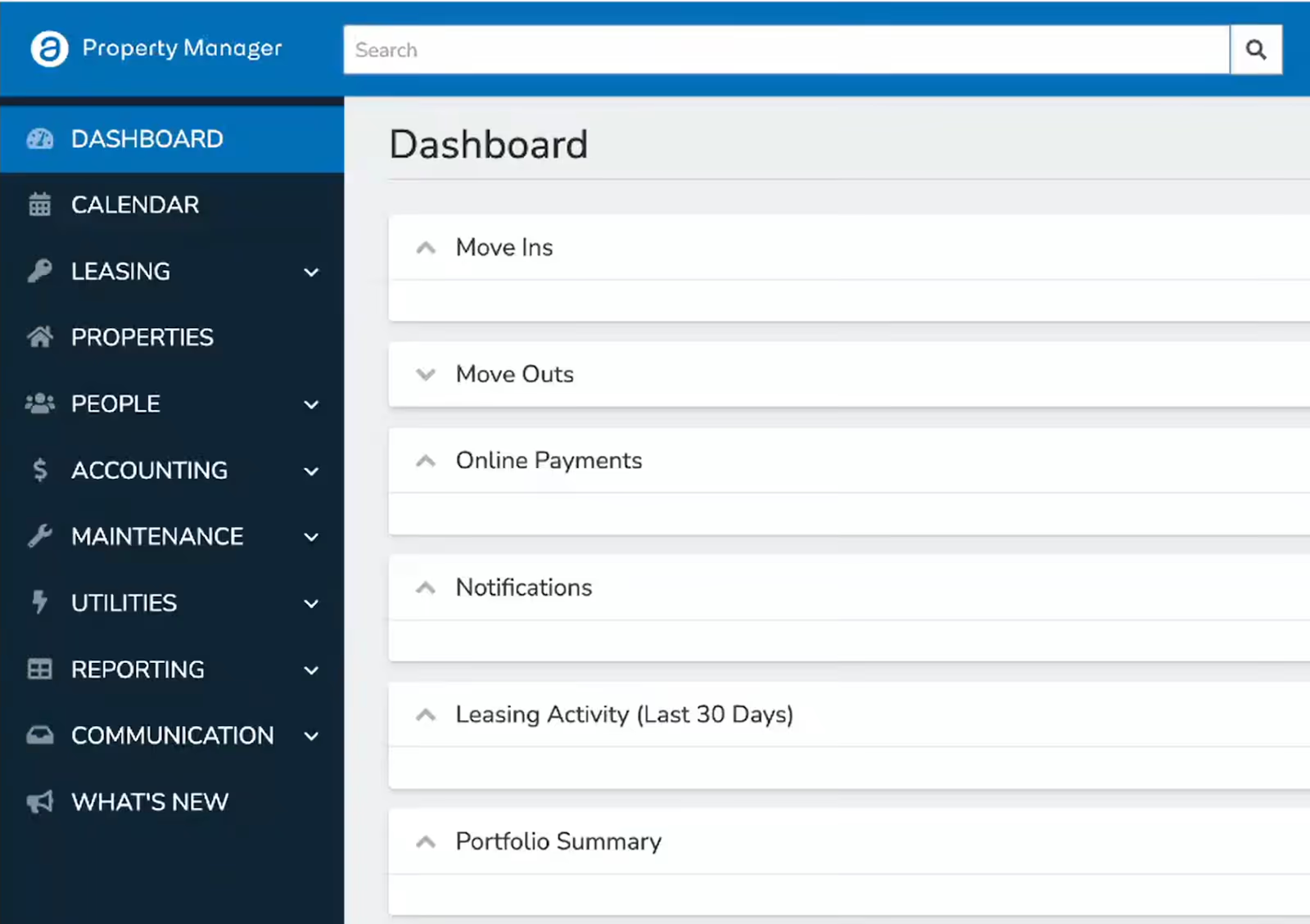
AppFolio Property Manager offers comprehensive property management software with integrated AI tools. Its AI leasing assistant “Lisa” answers inquiries, prequalifies prospects, and schedules showings around the clock.
Key AI Features
- Lisa AI Leasing Assistant: Handles prospect inquiries instantly across all channels.
- Automated Tour Scheduling: Books showings based on property and staff availability.
- Lead Qualification Scoring: Ranks prospects by conversion likelihood.
- Predictive Lead Prioritization: Identifies which leads need immediate human attention.
- Smart Follow-Up Sequences: Nurtures prospects who aren't ready to tour immediately.
Pricing
Custom pricing based on units and feature requirements; contact sales for a quote.
Pros
- Proven lead conversion improvements (15-30%)
- Easy implementation within the existing platform
- Works across text, email, and chat seamlessly
- Strong mobile app for field teams
- Regular feature updates and improvements
Cons
- AI features require a premium tier upgrade
- Limited to leasing workflows only
- Accounting AI capabilities remain basic
- Costs increase significantly with add-ons
- Some users report occasional response delays
Best for: Mid-market operators wanting AI leasing automation
4. Entrata (AI Leasing & Operations)
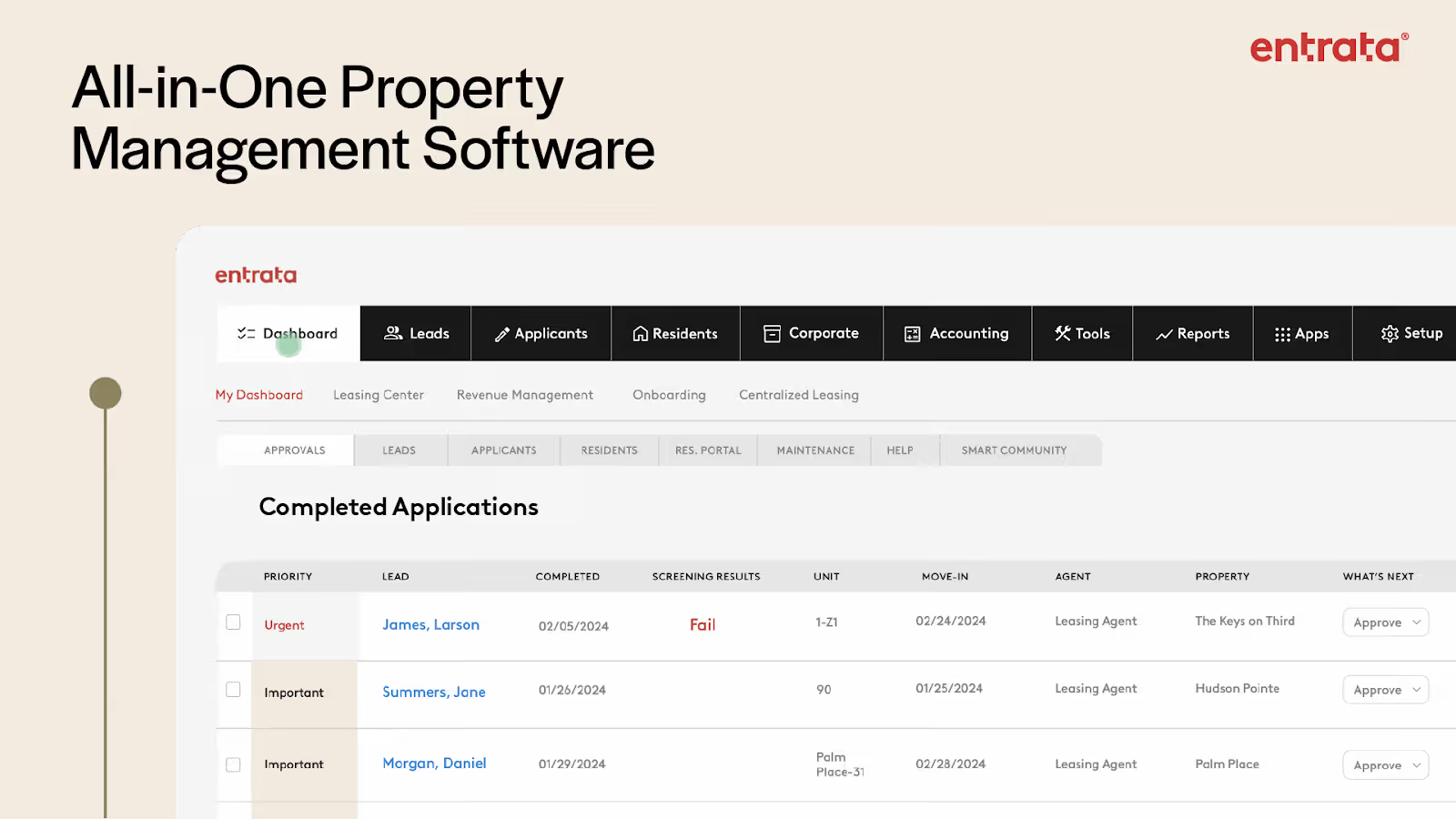
Entrata delivers all-in-one property management with AI across leasing, pricing, and operations. ResidentAI chatbot handles tenant support, while predictive algorithms optimize pricing and automate workflow routing across the platform.
Key AI Features
- ResidentAI Chatbot: 24/7 tenant support via conversational interface.
- AI-Powered Lead Scoring: Ranks prospects by conversion probability.
- Predictive Maintenance Scheduling: Anticipates equipment issues before failure.
- Dynamic Pricing Recommendations: Adjusts rent based on market conditions.
- Automated Workflow Routing: Assigns tasks based on team capacity and specialization.
Pricing
Custom based on modules selected and unit count.
Pros
- Unified platform reduces tool sprawl
- AI spans multiple workflows (not single-purpose)
- Strong resident engagement capabilities
- Comprehensive reporting and analytics
- Proven with large multifamily operators
Cons
- Complex setup and configuration process
- Can overwhelm smaller teams with features
- Implementation timeline is typically 3-6 months
- Support quality varies by tier
Best for: Large multifamily operators needing a unified AI platform.
5. Knock CRM (AI Leasing Intelligence)
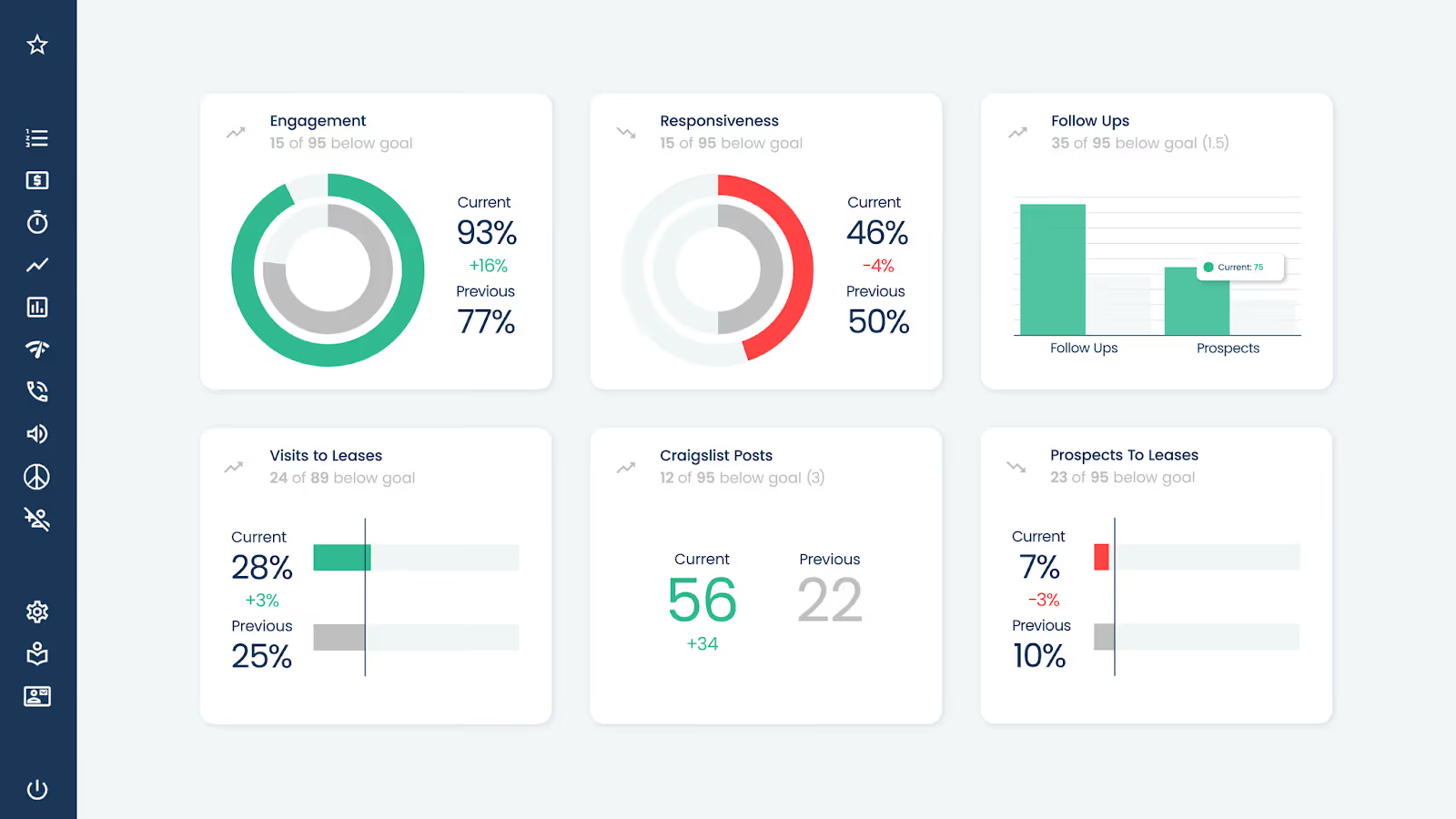
Knock delivers a CRM-first platform with AI-powered lead management designed specifically for multifamily leasing. The system scores leads, predicts conversion likelihood, and automates follow-up sequences to maximize lead-to-lease ratios.
Key AI Features
- AI Lead Scoring: Ranks prospects by conversion likelihood based on behavior.
- Predictive Conversion Analytics: Forecasts which leads will likely lease.
- Automated Follow-Up Sequences: Nurtures prospects with personalized timing.
- Smart Scheduling Optimization: Books tours at optimal times for conversion.
- Performance Insights: Identifies which leasing behaviors drive the best results.
Pricing
Custom pricing based on units and feature requirements; contact sales for a quote.
Pros
- Purpose-built for leasing team workflows
- Measurable conversion rate improvements
- Intuitive interface for non-technical users
- Strong mobile app for field leasing
- Integration with major PM platforms
Cons
- Focused only on leasing (no accounting/maintenance)
- Requires integration with separate PM software
- Limited AI capabilities beyond lead management
- Reporting customization is somewhat restricted
Best for: Multifamily (less suitable for scattered-site).
6. EliseAI (AI Communication Platform)
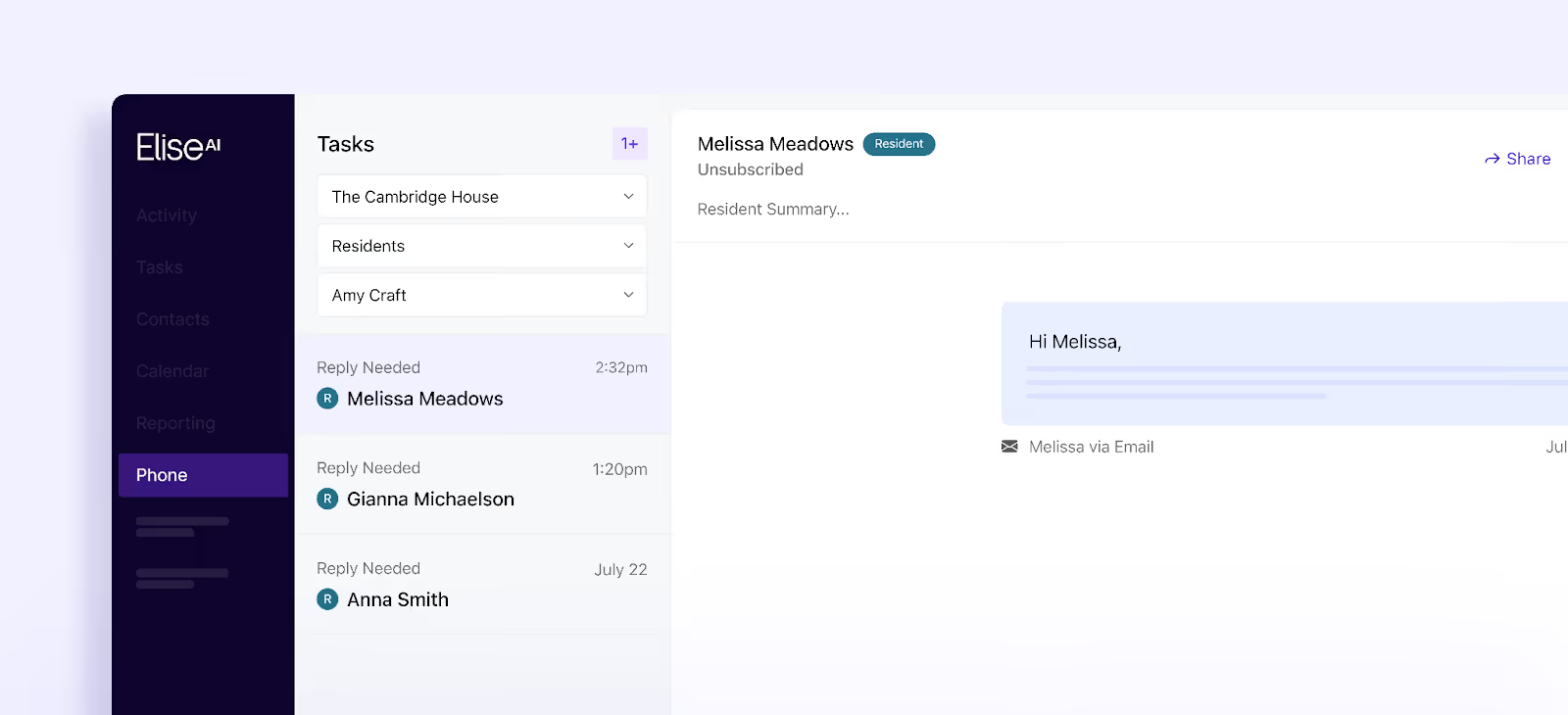
EliseAI specializes in conversational AI for property management, handling tenant inquiries, maintenance requests, and payment processing via natural language across text, email, and chat. The system supports multiple languages and learns continuously from interactions.
Key AI Features
- Natural Language Chatbot: Understands tenant requests across text, email, and chat.
- Maintenance Request Automation: Creates work orders from conversational requests.
- Payment Processing: Handles rent collection through a conversational interface.
- Multilingual Support: Communicates in Spanish, Chinese, Korean, and more.
- Sentiment Analysis: Detects escalation needs and routes to human staff.
Pricing
Custom based on unit count and communication volume.
Pros
- Best-in-class conversational AI for property management
- Works across all communication channels seamlessly
- Reduces staff inquiry volume by 40-60%
- Learns and improves from every interaction
- Strong multilingual capabilities
Cons
- Standalone tool requiring integration with PM platform
- Limited to communication (no accounting or operations)
- Implementation requires API setup
- Best for larger portfolios (200+ units)
Best for: Portfolios wanting 24/7 AI-powered tenant communication
7. Lula (AI Preventive Maintenance)
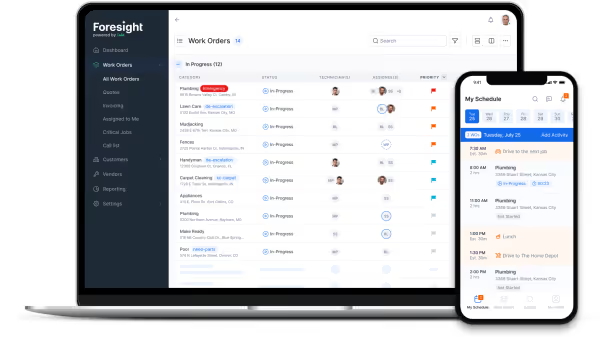
Lula uses AI to predict equipment failures, optimize maintenance schedules, and coordinate vendors. The platform analyzes maintenance history, equipment age, and performance patterns to identify issues before they cause expensive breakdowns.
Key AI Features
- Predictive Equipment Failure Detection: Analyzes patterns to forecast breakdowns.
- Smart Maintenance Scheduling: Optimizes preventive service timing.
- Vendor Performance Analytics: Tracks contractor speed, cost, and quality.
- Cost Optimization Recommendations: Identifies repair vs. replace decisions.
- Asset Lifecycle Tracking: Monitors equipment from installation to replacement.
Pricing
Custom pricing, contact sales for a quote.
Pros
- Reduces emergency maintenance costs 15-25%
- Easy vendor coordination and communication
- Clear ROI tracking and reporting
- Minimal setup compared to full PM platforms
- Transparent per-unit pricing
Cons
- Focused only on maintenance workflows
- Requires integration with PM platform
- Limited property type coverage initially
- AI requires 12 months of history for accuracy
Best for: Operators prioritizing maintenance cost reduction
8. Snappt (AI Document Fraud Detection)
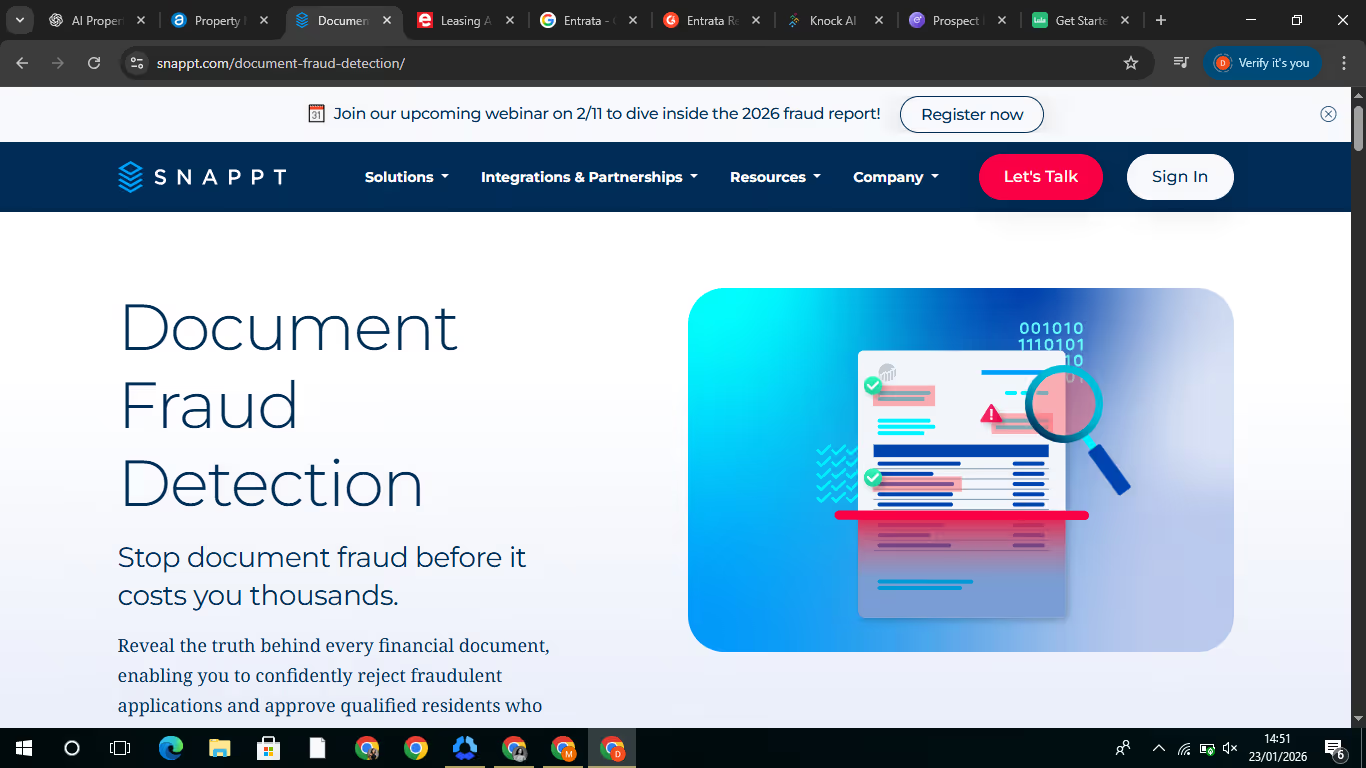
Snappt uses computer vision and machine learning to detect fraudulent documents during tenant screening. The AI analyzes paystubs, bank statements, and IDs to identify sophisticated forgeries that pass visual inspection.
Key AI Features
- Computer Vision Document Analysis: Scans for digital manipulation indicators.
- Paystub and Bank Statement Verification: Validates financial document authenticity.
- ID Authentication: Confirms government ID legitimacy.
- Fraud Score Generation: Provides confidence ratings for each document.
- Real-Time Verification API: Returns results within 24 hours.
Pricing
Custom pricing, contact sales for a quote.
Pros
- Catches sophisticated document fraud (98%+ accuracy)
- Fast verification turnaround (under 24 hours)
- Easy integration via API
- Significantly reduces fraud losses
- No monthly minimum commitments
Cons
- Single-purpose tool (screening only, no PM features)
- Per-screening costs add up at scale
- Requires a separate applicant tracking system
- Limited to document verification (no behavioral analysis)
Best for: Markets with high application fraud risk.
9. HappyCo (AI Property Inspections)
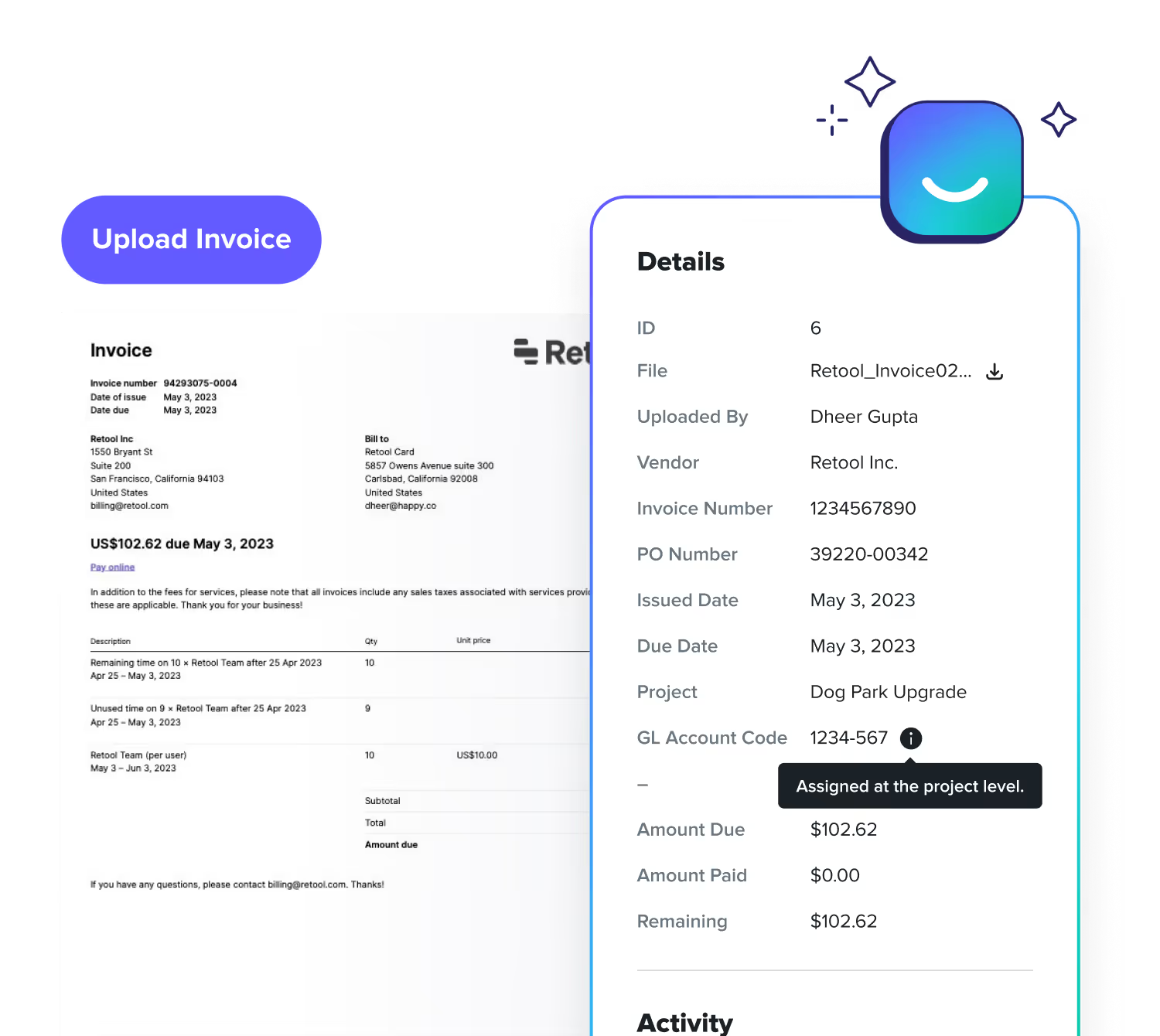
HappyCo uses computer vision and AI to digitize property inspections, automate condition assessments, and predict maintenance needs. The platform analyzes photos from mobile inspections to identify issues, track property conditions over time, and generate compliance-ready reports.
Key AI Features
- Computer Vision Photo Analysis: Automatically identifies maintenance issues from inspection photos.
- Predictive Maintenance Alerts: Flags deteriorating conditions before they become emergencies.
- Automated Condition Scoring: Generates objective property condition ratings.
- Compliance Report Generation: Creates audit-ready inspection documentation automatically.
- Historical Trend Analysis: Tracks property condition changes over time.
Pricing
Custom pricing based on portfolio size and inspection volume.
Pros
- Catches issues human inspectors miss
- Standardizes assessment criteria across your portfolio
- Mobile-first design for field teams
- Integrates with major PM platforms
Cons
- Requires staff to adopt mobile inspection workflows
- AI accuracy depends on photo quality
- Limited value for properties without visual deterioration issues
Best for: Operators needing automated property condition assessments.
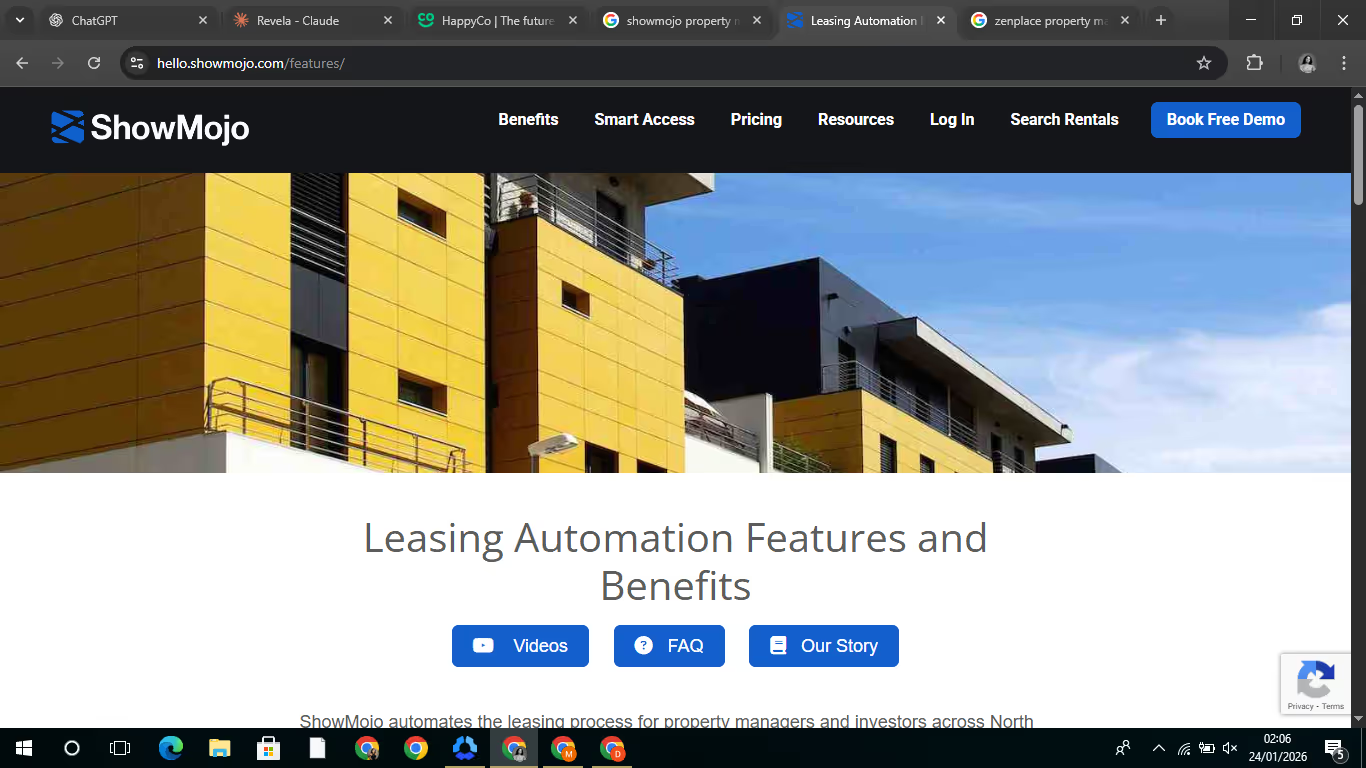
10. ShowMojo (AI Tour Scheduling)
ShowMojo automates showing and tour scheduling with AI optimization for self-guided tours. The platform schedules prospects, routes them efficiently across scattered properties, and follows up automatically based on tour completion.
Key AI Features
- AI Tour Scheduling Optimization: Books showings to minimize travel time.
- Smart Prospect Routing: Coordinates multiple properties efficiently.
- Automated Follow-Up Sequences: Nurtures prospects post-tour.
- Lead Scoring and Prioritization: Identifies hot prospects requiring immediate attention.
- Performance Analytics: Tracks conversion rates by property and time.
Pricing
Custom pricing, contact sales for a quote.
Pros
- Affordable for smaller operators and landlords
- Self-guided tour automation reduces staff needs
- Easy setup and implementation (days, not weeks)
- Strong ROI on time savings for scattered sites
- No long-term contracts required
Cons
- Limited to showing/touring workflows only
- Basic AI compared to enterprise platforms
- Integration capabilities restricted
- No accounting or maintenance features
Best for: Single-family and scattered-site portfolios.
How to Choose an AI Property Management Software
- Distinguish AI depth from AI marketing: True AI uses machine learning that improves over time, not static rules. Ask vendors what data trains their AI and how accuracy grows.
- Evaluate data foundation quality: AI works best on clean, reconciled accounting data. Messy data creates misleading outputs. Platforms like Revela that start with accurate ledgers deliver reliable AI outputs.
- Consider integration requirements: Systems like Revela, AppFolio, or Entrata offer built-in AI. Because the data lives in one place, the AI works out of the box with zero setup. This reduces technical "friction" and ensures your accounting, leasing, and maintenance data talk to each other perfectly. Other tools require API connections to link with your existing software. While these offer deep, specialized functionality for a single task (like advanced fraud detection), they increase "integration complexity" and may require more manual oversight to keep data synced.
- Match AI capabilities to your pain points: If accounting errors cost you the most, prioritize exception detection. If vacancy drives losses, focus on leasing AI. If maintenance consumes your budget, it’s best to choose predictive systems.
- Assess implementation requirements: AI implementation requires data cleanup, training periods (30-60 days for learning), and team education. Understand what's required before purchasing.
Conclusion
AI is more than a technical upgrade; it’s a fundamental shift in how property management scales. By moving from reactive "firefighting" to proactive optimization, you stop chasing problems and start predicting them.
Whether you choose a unified platform like Revela for seamless, out-of-the-box intelligence or bridge specialized tools via APIs, the goal remains the same: reclaiming your time. The most successful implementations start small—clean up your data, automate a single high-impact workflow like accounting or maintenance, and scale as the results prove themselves.
Ready to see accounting-first AI in action? Book a demo to explore Revela’s AI capabilities and discover how exception detection and intelligent task automation can transform your portfolio from a manual burden into a high-performance engine.
Frequently Asked Questions
How much does AI property management software cost?
Pricing varies widely by platform type. Costs range from $35/month or $5–$8 per use to custom enterprise pricing, with most portfolios budgeting $2–$10 per unit monthly.
Can AI property management software integrate with my current system?
Most AI tools offer API integration with major platforms. Revela, AppFolio, and Entrata are all-in-one solutions with built-in AI. Point solutions like EliseAI, Lula, and Snappt integrate via API. Check compatibility before purchasing.
How accurate is AI for property management tasks?
AI accuracy depends on data quality. Fraud detection can exceed 98%, revenue can improve 3–8%, and errors are caught that humans often miss.
What's the ROI timeline for AI property management software?
Most AI platforms show ROI in 90 days, with immediate accounting fixes, faster leasing, quarterly maintenance savings, and 6–12 months for full revenue optimization.
Do I need technical expertise to implement AI property management software?
No. Most AI platforms need only data cleanup and training, with cloud-based tools handling the technical setup.
Which AI features deliver the fastest ROI?
Exception detection and accounting deliver the fastest ROI, followed by task automation; revenue optimization yields longer-term gains.