AI for Property Management: 8 Practical Applications in 2026
February 23, 2026

AI for Property Management: 8 Practical Applications in 2026
Quick Summary
AI is transforming property management from reactive problem-solving to proactive operations. This guide covers 8 practical AI applications, starting with Revela AI's exception detection and workflow automation that reduce errors, save time, and improve decision-making. Learn which AI tools deliver real ROI and how to implement them without disrupting operations. Feel free to explore our blog for more property management insights.
How Can AI Help with Property Management?
A $12,000 coding error is discovered three weeks after a month-end close. The invoice was miscategorized, yet vendors were paid, owner statements sent, and budget decisions made using faulty data, forcing weeks of rework.
This is common in property management. Manual reviews happen monthly at best, allowing small errors to compound. AI addresses this by continuously monitoring transactions, flagging exceptions in real time, and automating time-consuming workflows.
AI adoption in property management has been slow, but it’s accelerating. Statista reports that 84% of companies view AI as a competitive advantage. For property managers, this means catching errors before close, responding to prospects instantly, and making decisions with real-time data.
In this Revela guide, we outline 8 proven AI applications, including how to implement each and the results to expect.
Why Listen to Us?
Revela is a property management software pairing property management workflows with built-in, audit-ready accounting and real-time financial clarity so teams can close faster, reduce errors, and make better decisions. Because our AI sits directly on top of clean ledger data, it can detect exceptions, automate multi-step processes, and generate portfolio intelligence without relying on messy integrations. Trusted by growing portfolios across property types, giving us firsthand insight into where AI creates real operational leverage. Revela AI monitors transactions in real time, flags exceptions automatically, and executes multi-step workflows, with one click.
Understanding AI in Property Management
AI for property management uses machine learning and natural language processing to handle tasks requiring judgment and pattern recognition. Unlike basic automation following predetermined rules, AI adapts based on data patterns, learns from outcomes, and handles exceptions intelligently.
Three categories define AI applications in property management:
- Detection AI catches errors, flags exceptions, and monitors patterns continuously.
- Execution AI automates multi-step workflows and handles routine tasks without human intervention.
- Intelligence AI answers questions, generates insights, and predicts outcomes based on historical data.
The eight applications below demonstrate these categories in action.
8 Ways to Use AI for Property Management
1. Real-Time Exception Detection and Accounting Oversight
Manual accounting reviews occur monthly, letting errors compound before discovery, turning the month-end close into a reconciliation nightmare.
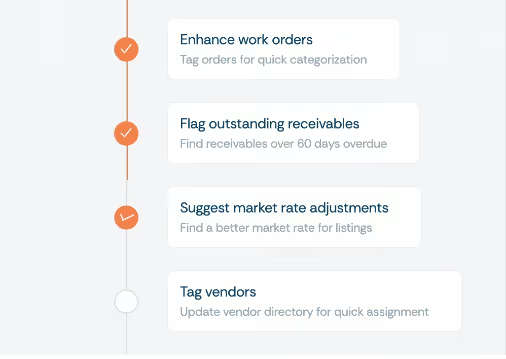
Tools like Revela AI monitor transactions in real time, flagging issues like miscoded invoices or duplicates before they reach your ledger. It alerts you to budget overruns the moment expenses exceed thresholds, preventing costly post-close corrections.
This continuous oversight ensures accurate financials and saves time by fixing errors immediately.
- Implementation: Choose platforms with AI built on reconciled accounting data. Define which exceptions matter most, such as coding errors, duplicates, and budget variances. Set alert thresholds and train your team on response workflows.
- Expected Outcomes: Month-end close time drops 40-60%. Accounting errors get caught within 24-48 hours instead of weeks, and owner confidence in financial accuracy improves measurably.
2. Intelligent Task Automation and Workflow Execution
Reassigning vendors for stalled work orders takes 15-30 minutes each, adding up to days of staff time weekly on administrative tasks.
Revela AI automates multi-step processes with a single click. If a work order stalls, the AI reassigns it, notifies parties, and updates dashboards. Prospect follow-ups and routine tenant communications happen automatically, adapting to historical patterns.
This intelligent execution learns which vendors respond fastest, which communication tones convert, and which follow-up timing closes more leases.
- Implementation: Map your 5 most repetitive workflows and calculate the monthly time spent on each. From this, you can prioritize workflows that consume 10+ hours monthly. Make sure to test AI automation on pilot properties before a full rollout.
- Expected Outcomes: Save 20-30 staff hours monthly. Achieve faster response times for vendor coordination and tenant communication. Reduce dropped tasks and follow-up failures.
3. Natural Language Portfolio Intelligence
"Which properties exceeded maintenance budgets this quarter?" Traditional systems require exporting data and manually calculating variances, taking 30-60 minutes per query.
AI-powered query systems let you ask questions naturally and receive accurate answers instantly. Revela AI understands your portfolio structure, accounting categories, and operational data because it's built on your reconciled ledger.
Ask "Show me units with lease renewals in 60 days" or "What's our average repair resolution time by property?" and get immediate results.
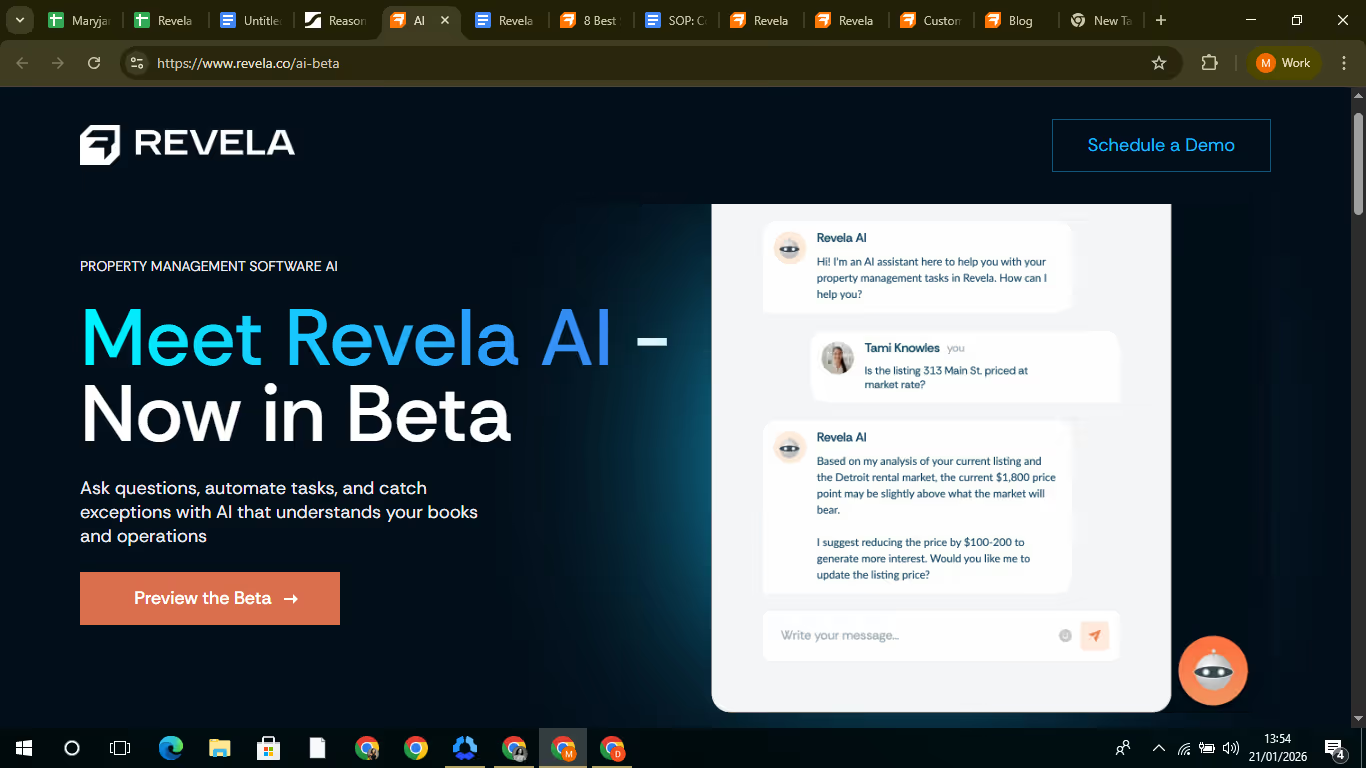
This instant access speeds decision-making, allowing property managers to answer owner questions during calls and executives to evaluate opportunities with accurate data in seconds.
- Implementation: Start by documenting your team’s 10 most frequent portfolio questions, from vacancy trends to expense outliers, and use them to stress-test your AI query system.By training your team on effective phrasing early, you build the "data muscle" needed for more complex, multi-factor queries.
- Expected Outcomes: This shift turns data into a real-time asset, allowing you to answer owner questions during live conversations rather than days later. By moving from slow quarterly reviews to agile weekly pulse checks, your team can make high-stakes, data-driven decisions in minutes, transforming the way you communicate value to your stakeholders.
4. AI-Powered Leasing and Prospect Communication
Industry studies show that responding within five minutes can boost conversion rates by 400%. However, human teams can't maintain that speed 24/7.
AI leasing assistants like Revela AI, Leasing IQ, and AppFolio's Realm-X handle inquiries via text, email, and chat instantly. They provide information on amenities, pricing, and availability, schedule tours, and send follow-ups when prospects go silent.
The best systems personalize responses, highlighting pet-friendly units or properties with garages based on specific inquiries.
- Implementation: Success in AI-driven leasing starts with identifying your highest-stakes opportunities. Begin by benchmarking your current response times and conversion rates, then deploy AI specifically for portfolios where vacancy costs exceed $5,000 monthly. This targeted implementation allows you to monitor conversion improvements over a 90-day window, providing a clear proof of concept before a full-scale rollout.
- Expected Outcomes: By providing 24/7 prospect coverage without additional staffing costs, you can expect a boost in lead-to-tour conversions. This automation doesn't just fill units faster; it offloads the "noise" of routine inquiries, allowing your leasing team to focus exclusively on closing high-value applications and improving the resident onboarding experience.
5. Predictive Maintenance and Equipment Monitoring
Reactive maintenance, like an emergency $1,500 HVAC replacement, is a major cost driver. AI platforms like Mezo and HappyCo shift the model to "predict and prevent" by analyzing equipment age, performance data, and repair history.
By flagging unusual runtime patterns or appliances nearing their failure threshold, you can address issues before they trigger emergency premiums or tenant relocation.
- Implementation: Begin by tracking your most expensive failure categories, such as HVAC and water heaters, for 12 months. Implement predictive systems focused on those categories first.
- Expected Outcomes: Deploying predictive systems in these areas first can reduce maintenance costs by 15–25% and drastically cut emergency calls. The result is a more stable bottom line and significantly higher tenant satisfaction due to fewer service disruptions.
6. Dynamic Pricing and Revenue Optimization
Static pricing often lags behind the market, as quarterly reviews fail to capture rapid shifts in demand. AI systems like RealPage’s YieldStar solve this by analyzing seasonal patterns, competitor rates, and unit-specific factors in real time. These algorithms intelligently balance occupancy against revenue, automatically recommending rent increases when demand peaks or strategic concessions when vacancy risks emerge.
- Implementation: Start by testing dynamic pricing on a small segment (roughly 10–20%) of your portfolio. By comparing the revenue per available unit against your "static" control properties, you can validate the approach before a wider rollout.
- Expected Outcomes: Expect a 3–8% increase in annual revenue and a more resilient occupancy rate, as your pricing finally moves at the speed of the market.
7. Intelligent Document Processing and Screening
Manual screening is a notorious bottleneck, often requiring 30–45 minutes per applicant to verify IDs and cross-reference financial data. AI platforms like Snappt and Vouched transform this process by using computer vision and facial recognition to extract data and verify identities instantly. These systems automatically flag falsified documents and rank applicants based on your predefined qualifications, ensuring high-speed processing without compromising security.
- Implementation: Deploy AI screening first in portfolios handling 50 or more applications monthly to see the most immediate ROI.
- Expected Outcomes: By tracking processing times and fraud detection rates, you’ll likely see applications move 60–75% faster. Beyond the speed, this automation provides a standardized audit trail that significantly reduces fraud losses and strengthens Fair Housing compliance through perfectly consistent evaluations.
8. Automated Tenant Communication and Support
Tenant inquiries often follow repetitive patterns (office hours, policy clarifications, and payment confirmations) that constantly interrupt staff workflows. Worse, after-hours requests often sit unanswered until the following morning.
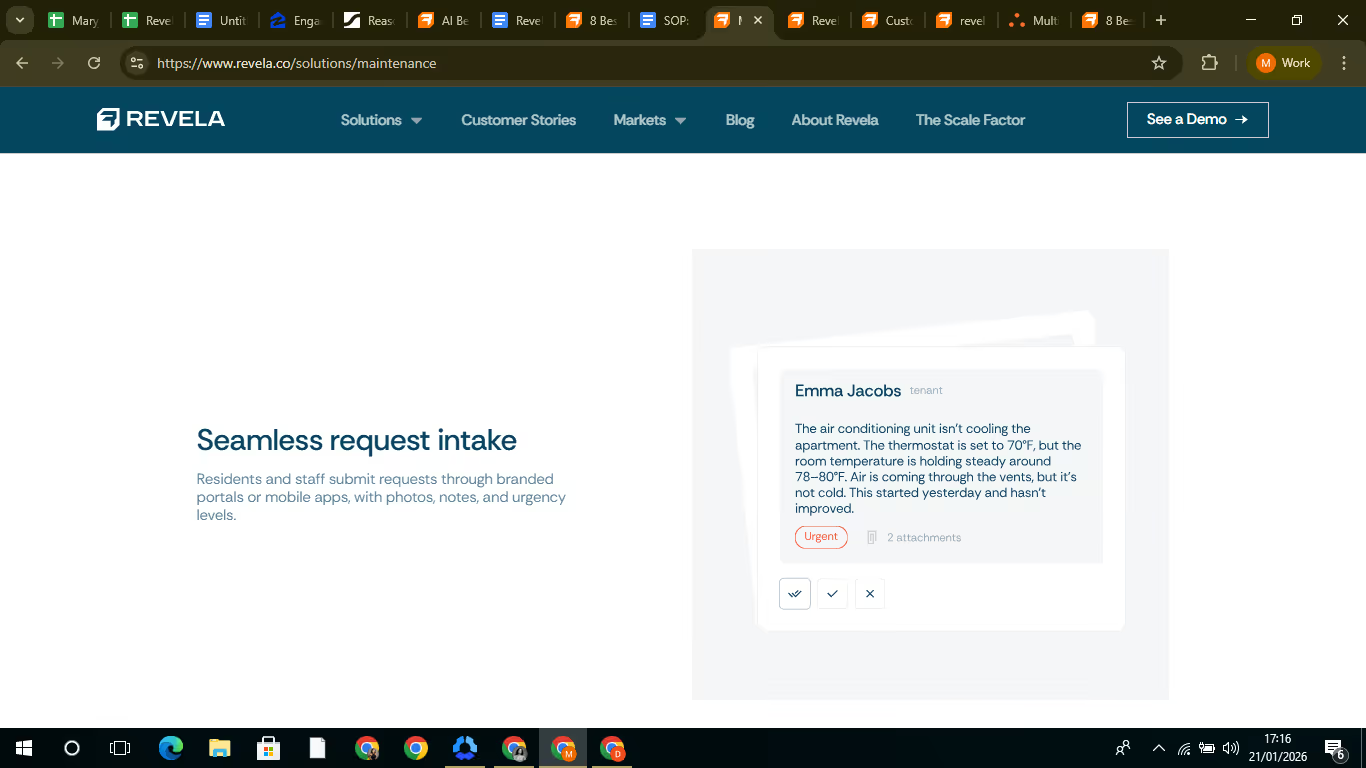
AI assistants like Revela, EliseAI, and Stan AI bridge this gap by providing 24/7 conversational support. These systems understand context, recognizing that "my sink is leaking" should immediately trigger a maintenance workflow, while handling everything from amenity reservations to contact updates without human intervention.
- Implementation: Prioritize AI deployment for portfolios where manual inquiries consume more than 10 staff hours per week.
- Expected Outcomes: By tracking resolution times and total inquiry volume, you can expect to reclaim 10–15 hours of staff time weekly. This ensures tenants receive instant answers at any hour, significantly boosting satisfaction while allowing your team to focus on complex resident issues that require a human touch.
Best Practices for AI Implementation
AI is a powerful engine, but it requires a solid foundation to run effectively. Rather than a "rip and replace" approach, successful firms implement intelligence in layers to ensure accuracy and team buy-in.
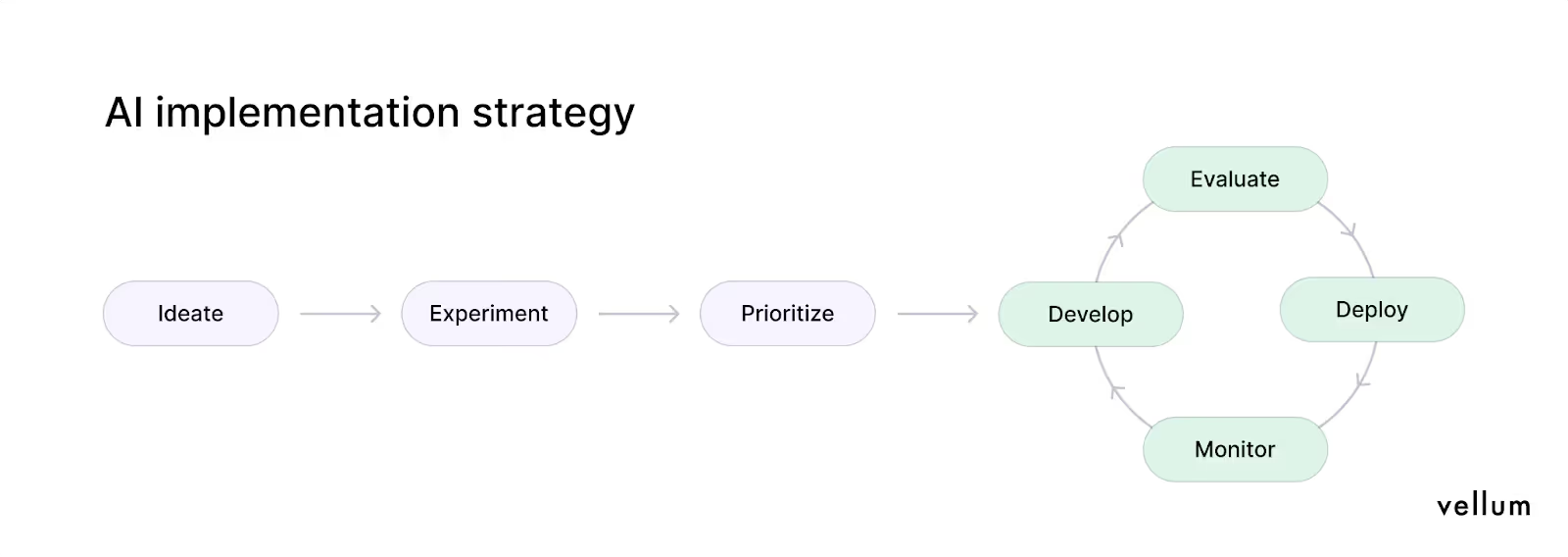
Audit and Prioritize by ROI
Begin by identifying the manual processes that cause the most friction or "firefighting." To prioritize, calculate the potential ROI: multiply the hours saved by your team's hourly rate. Start with the high-impact bottlenecks that stifle your ability to take on new doors.
Implement in Strategic Layers
- Layer 1 - Oversight (The Foundation): Start with accounting-adjacent AI. Automated detection and oversight deliver the fastest returns by preventing expensive ledger errors.
- Layer 2 - Execution (The Engine): Once your data is clean, expand to execution AI for task automation and workflow optimization.
- Layer 3 - Intelligence (The Vision): Layer predictive queries and trend forecasting last, because these sophisticated tools require the solid data foundations built in the first two stages.
Prioritize Data Quality Over Sophistication
AI is only as reliable as the data it consumes. Before going live, standardize your vendor names, reconcile historical transactions, and clean your accounting ledgers. Platforms like Revela, where AI is built directly onto reconciled ledgers, produce far more trustworthy outputs than "add-on" tools trying to read messy data.
Focus on Adoption and Outcomes
Technology is only as effective as the people using it. Involve your staff in the selection process and celebrate early wins to build momentum. Finally, ensure you are measuring specific, quantified outcomes, like hours reclaimed or fraud prevented, to prove that your AI isn't just a buzzword, but a business driver.
Common Mistakes to Avoid During AI Implementation
- Neglecting Data Quality: AI systems rely on clean, accurate data. Inaccurate or incomplete data can lead to faulty predictions and decisions.
- Overlooking Staff Training: Even with AI tools, proper training is essential for staff to maximize the system’s potential and ensure smooth integration.
- Implementing Without a Clear Strategy: Introducing AI without a clear use case or measurable goals can lead to wasted resources and unmet expectations.
- Balancing Automation with Human Judgment: While AI is powerful, it can’t replace human judgment in complex decision-making, especially in sensitive tenant relations.
- Failing to Continuously Monitor and Optimize: AI systems improve over time, but regular monitoring and adjustments are necessary to ensure optimal performance.
- Implementing Multiple AI Tools Simultaneously: Using too many tools at once can overwhelm your system, leading to integration issues and inefficiencies.
- Ignoring AI’s Adaptation Period: AI tools require time to learn and adapt to your business's specific needs. Expecting immediate perfection can result in disappointment.
- Overlooking Compliance and Ethical Considerations: AI tools must comply with relevant regulations (e.g., GDPR, CCPA). Failing to ensure compliance can result in legal and reputational risks.
Optimize Your Property Management with Revela
The transition to AI is a fundamental shift in the property management landscape. By removing the weight of administrative tasks, AI enables managers to stop "working in the business" and start "working on the business", refocusing their energy on high-level strategy and portfolio growth.
The path forward is simple: start with high-impact use cases like accounting oversight and task automation, build on a foundation of reconciled data, and scale as the results prove themselves. In an industry moving toward total automation, the firms that adopt these tools today will outpace competitors still tethered to manual, error-prone processes.
Explore Revela AI’s beta and see firsthand how exception alerting and intelligent task automation can transform your operations from a daily grind into a high-performance engine.
Frequently Asked Questions
What's the difference between automation and AI in property management?
Automation follows predetermined rules. AI learns from patterns, adapts to context, and handles exceptions intelligently. Automation executes "if X happens, do Y." AI determines which Y makes sense based on historical outcomes.
How much does AI for property management cost?
Costs vary widely. AI features within existing platforms like Revela are included in base pricing. Standalone AI tools range from $100-500 monthly for chatbots to custom pricing for enterprise revenue management systems.
Can AI replace property managers?
No. AI handles routine tasks and flags exceptions, but complex decisions requiring judgment, relationship management, and strategic thinking remain human responsibilities. AI shifts work from administrative to strategic.
What data does AI need to work effectively?
AI requires clean, consistent historical data. For accounting AI, that means reconciled ledgers with standardized vendor names and account codes. For predictive maintenance, 12+ months of work order history. Garbage data produces garbage AI outputs.
Which AI application delivers the fastest ROI?
Exception detection and accounting oversight typically deliver fastest returns because they prevent expensive errors immediately. Task automation follows closely by saving substantial staff time on repetitive workflows.