Property Management Workflow Automation: 12 Processes & 6 Tools to Scale Your Operations
February 19, 2026

Quick Summary
Property management workflow automation removes manual bottlenecks that limit portfolio growth. This guide covers 12 property management processes you can automate to save time, reduce errors, and scale your operations. We also review 6 leading automation tools to help you choose the right platform. Use this to evaluate your options, streamline operations, and grow confidently. Explore our blog or book a demo to learn more.
Looking to Scale Without Adding Headcount?
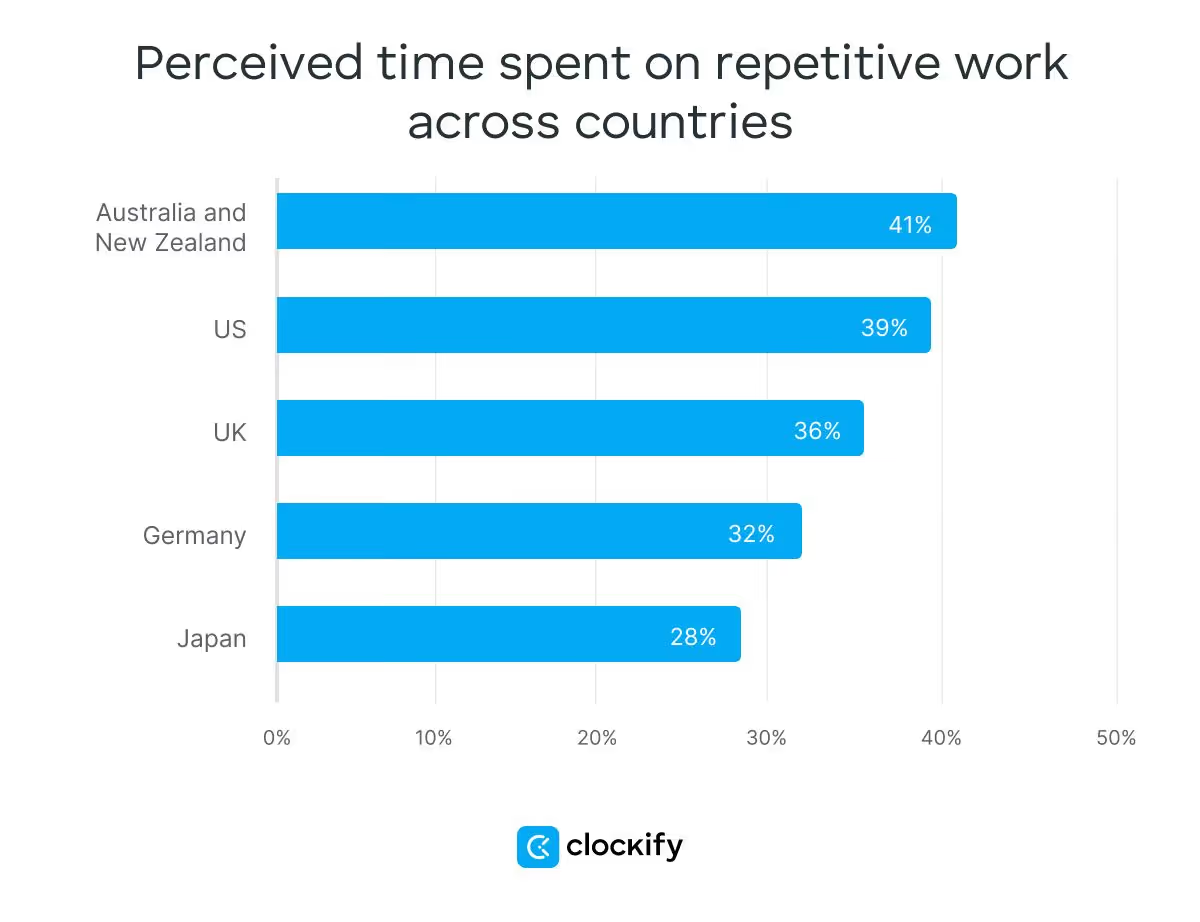
Workers waste 219 hours annually on repetitive tasks that software could handle, according to a 2021 Clockify study. For property management companies, that waste multiplies across every team member, creating bottlenecks that prevent growth.
Manual accounting forces you to float expenses because systems can't show accurate cash balances. Month-end close stretches into days. Owner reports pile up while your team drowns in reconciliation and scattered maintenance requests.
Fortunately, this Revela guide identifies which workflows deliver the biggest returns when automated and which tools help you scale without proportional increases in headcount.
Why Listen to Us?
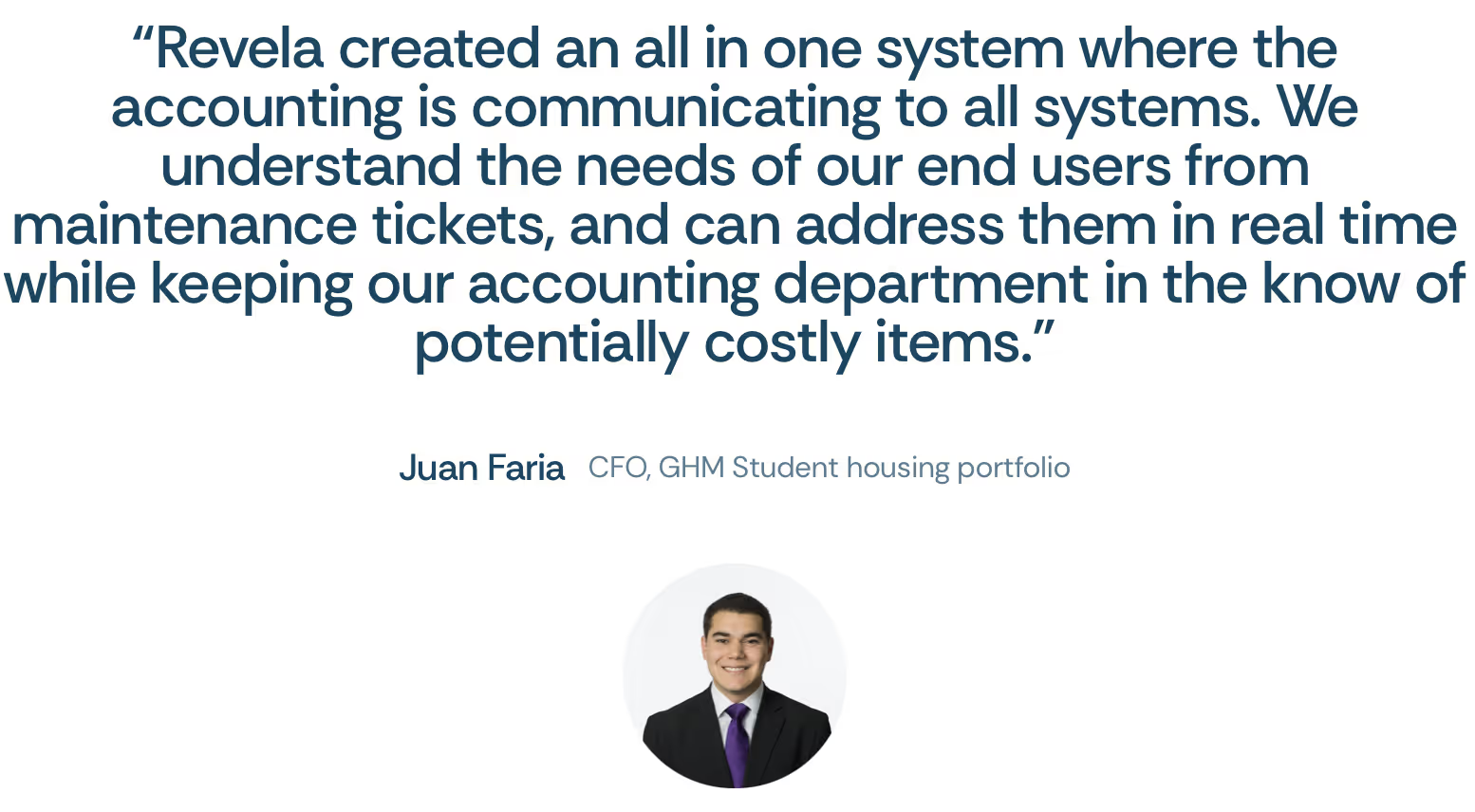
At Revela, we built property management software ledger-first, not bolted on. Our platform delivers enterprise-grade trust accounting that cuts close cycles in half, real-time reporting that eliminates guesswork, and embedded payments that keep cash flowing. We've helped operators replace 3-4 disconnected tools with one system and scale to thousands of units without adding accounting staff. This guide shares what we've learned by automating the workflows that actually grow property management businesses.
What is Property Management Workflow Automation?
Property management automation puts recurring tasks, like rent collection and maintenance, on autopilot. It eliminates the manual errors and "admin drain" that stifle scaling.
This isn't about replacing people. It’s about freeing them. By offloading the busywork, your team can pivot to high-value growth: nurturing owner relationships and improving resident retention. The result is a leaner operation with total visibility and faster decision-making.
Why is Property Management Workflow Automation Important?
Property management is full of repetitive tasks; tracking rent, logging maintenance requests, updating owner statements, and scheduling vendors. Each task eats up time and leaves room for mistakes.
Manual processes might work for a handful of units, but they quickly break under growth. Automation fixes this by:
- Streamlining Accounting: Faster, accurate reports and error-free trust accounting.
- Simplifying Maintenance: Track requests, approvals, and work orders in one dashboard.
- Improving Communication: Tenants and owners get self-serve portals, cutting back-and-forth.
- Providing Real-Time Insights: Make faster, smarter business decisions with live reporting.
Companies that automate early scale faster, reduce mistakes, and stay ahead of competitors.
12 Property Management Processes You Should Automate
Not all automation delivers equal value. It’s best to start with processes that consume the most time, create the most errors, or directly impact revenue and resident satisfaction.
1. Accounting and Reconciliation
Month-end close shouldn't take a week. If your books aren't reconciled in real time, you're either floating expenses for owners or stalling vendor payments while you figure out who has funds available.
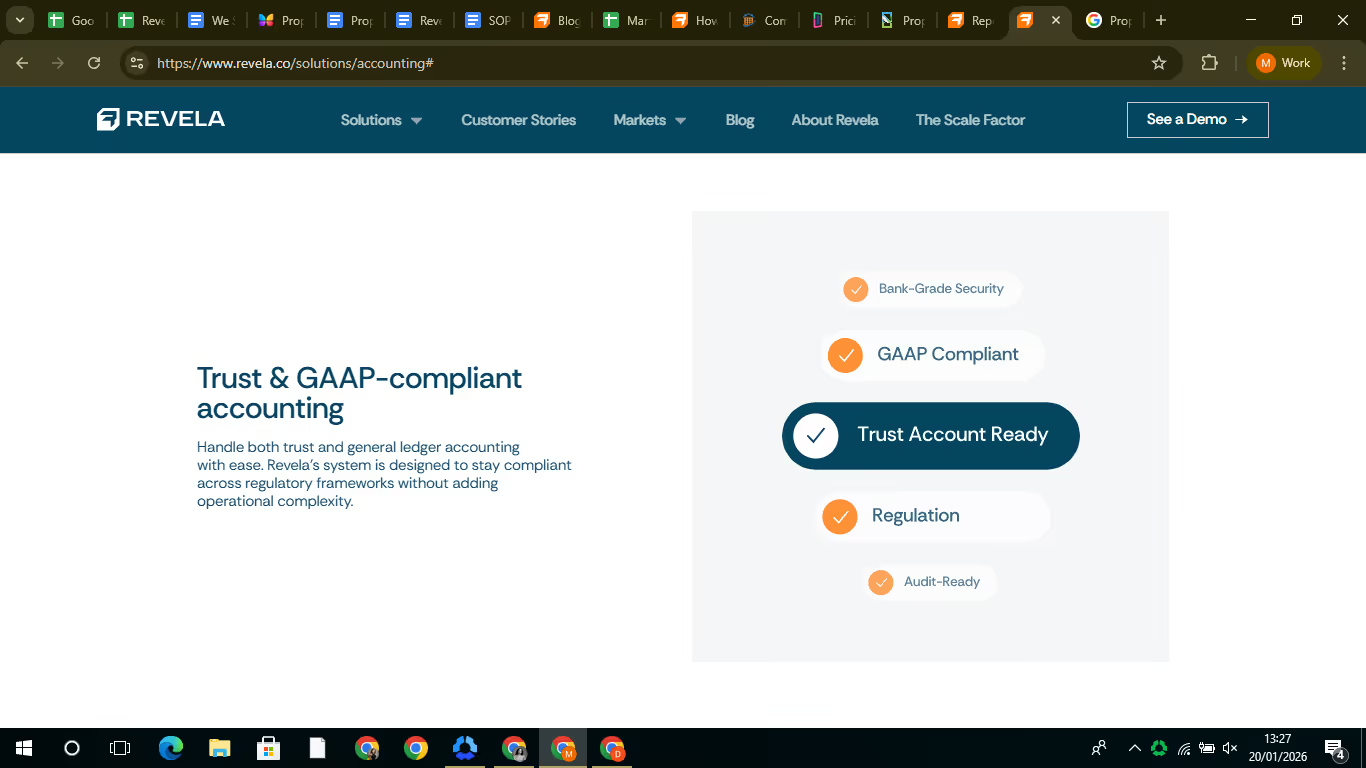
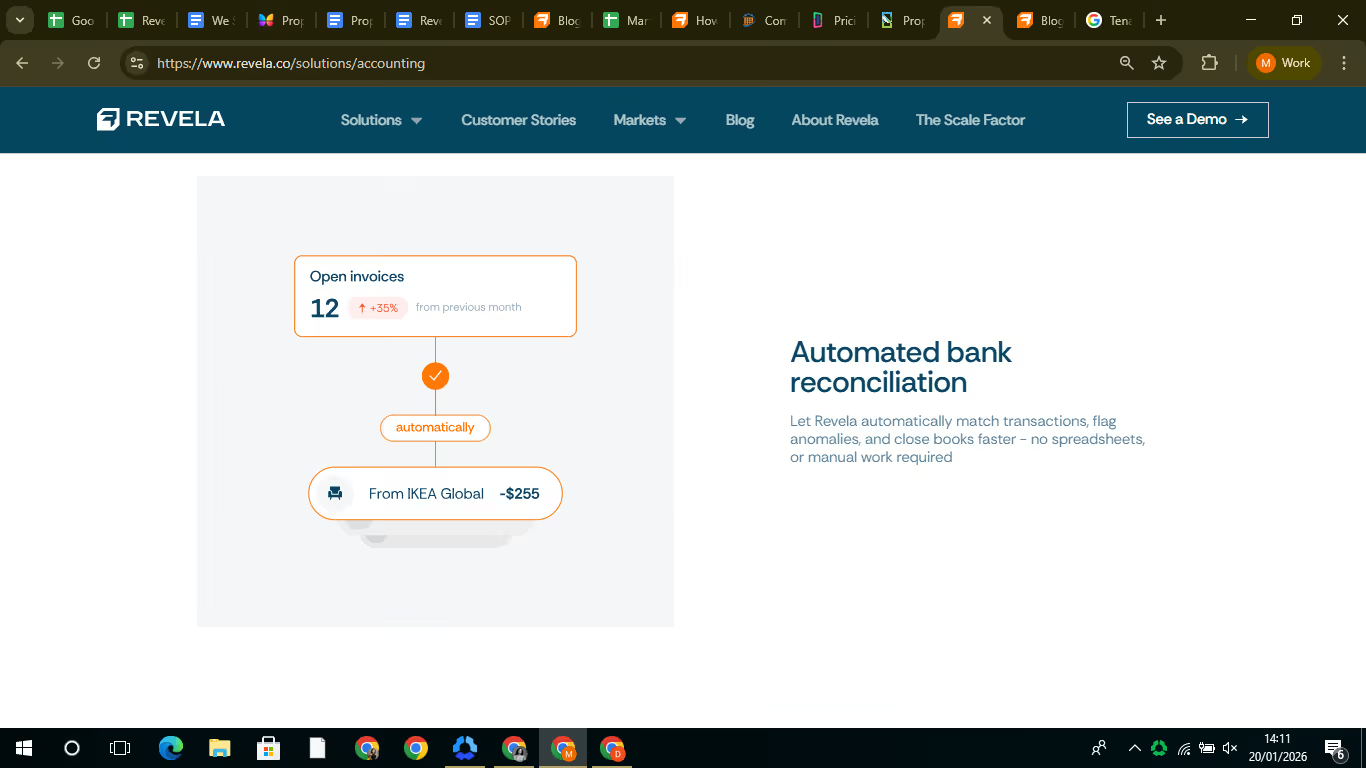
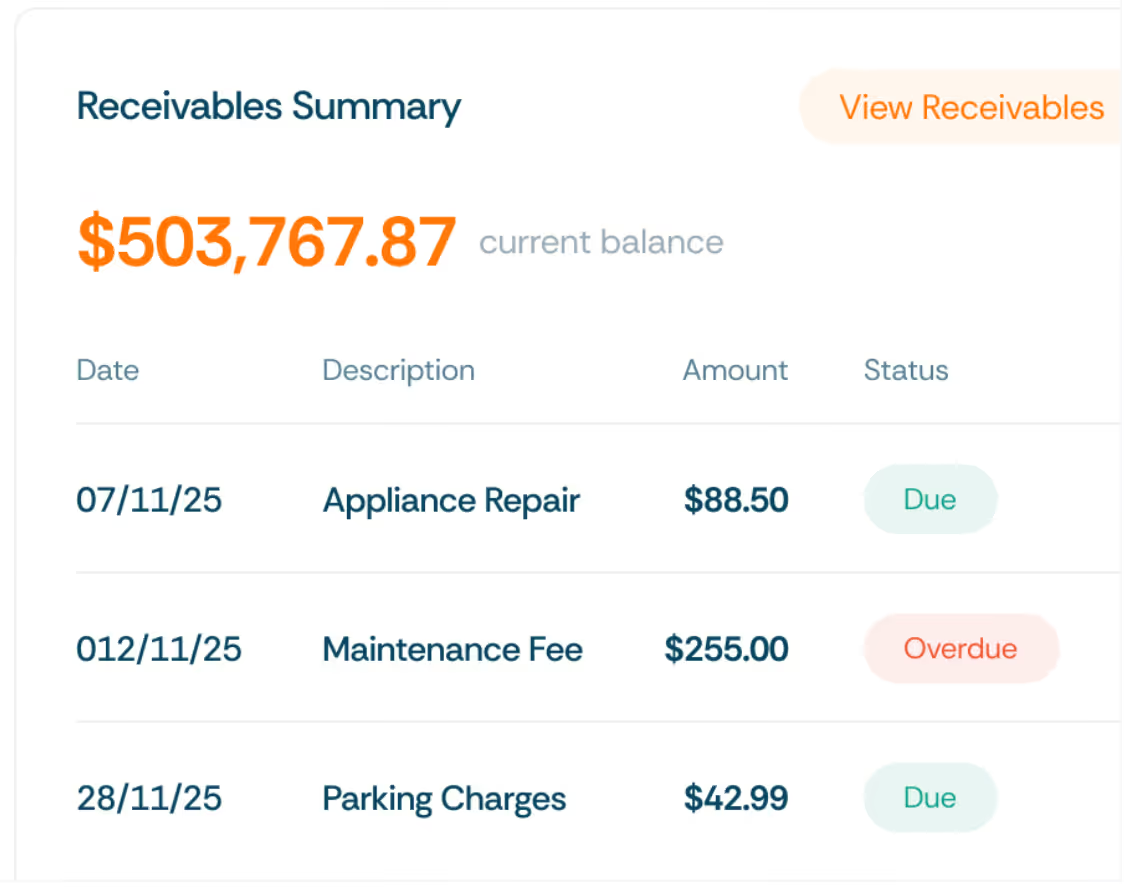
Automated accounting ties every transaction, such as rent payments, maintenance invoices, owner disbursements, and more, directly to the ledger as it happens. The system categorizes expenses, assigns them to the right properties, and updates reporting instantly. Your team stops entering data twice, and reconciliation becomes continuous instead of a monthly fire drill.
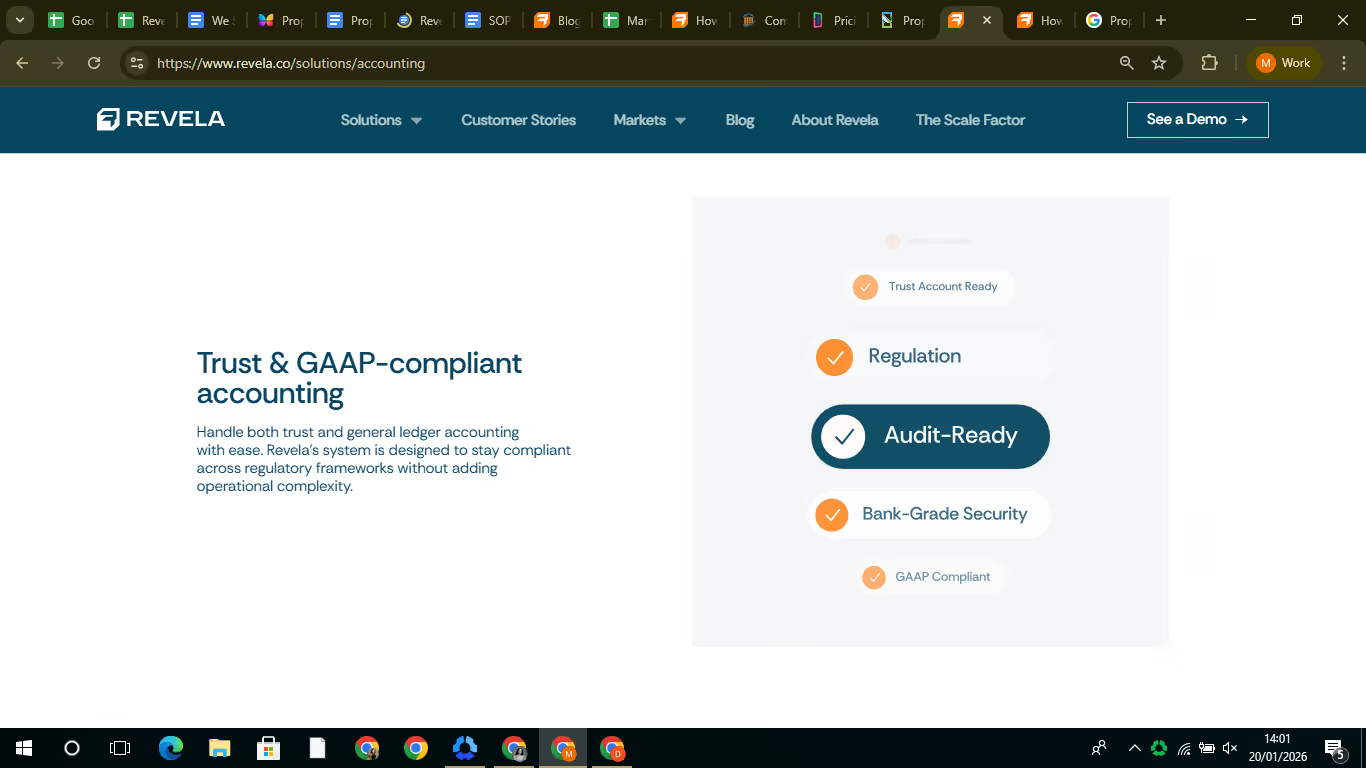
For trust accounting, the system maintains separate ledgers for owner funds, generates audit trails automatically, and keeps you compliant without manual tracking. When auditors show up, you export complete records in minutes instead of reconstructing months of transactions from spreadsheets.
2. Owner and Investor Reporting
Owners want to know how their properties perform. If generating monthly statements takes your accounting team three days, you're limited in how many properties you can manage profitably.
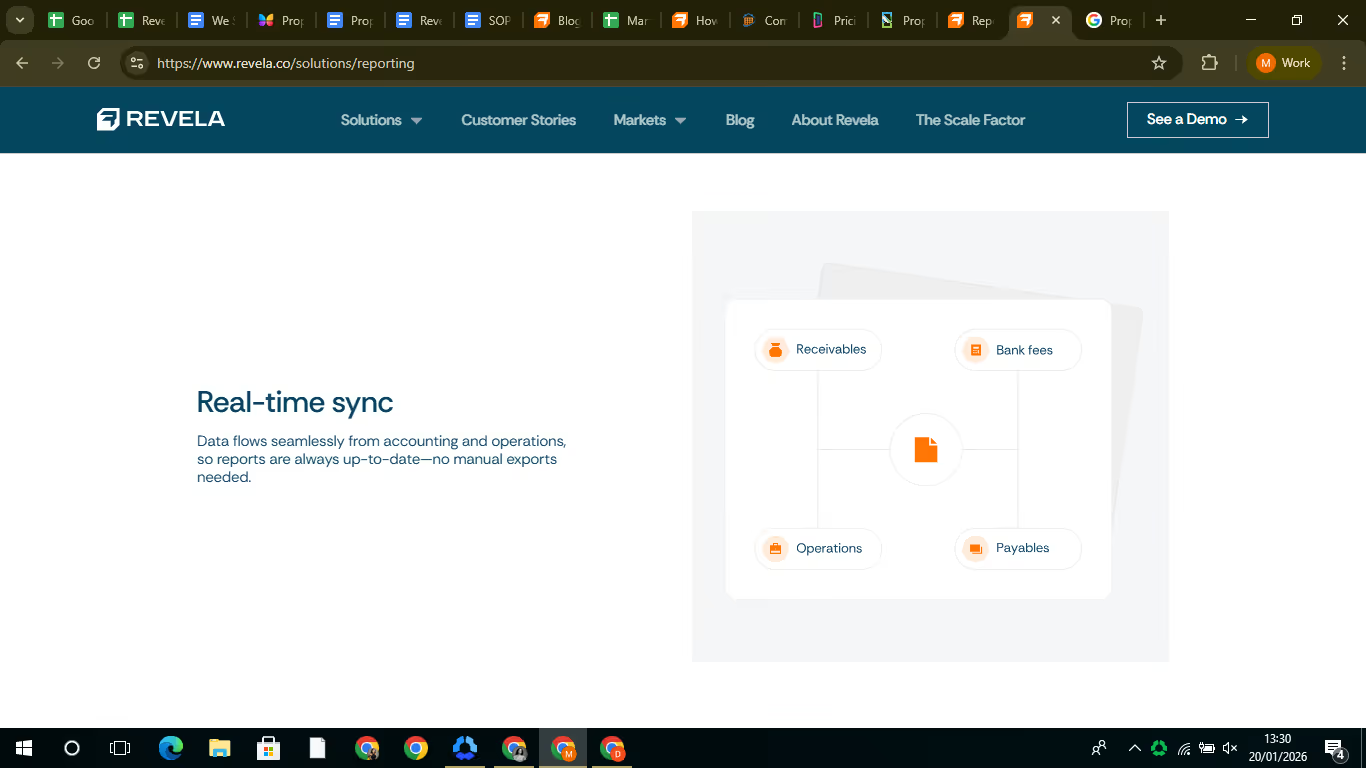
Automated reporting pulls data straight from your reconciled ledger and builds customized reports on demand. Monthly income statements, quarterly cash flow analysis, year-end tax docs—the system handles it all without tying up your team.
Real-time dashboards let owners check occupancy, review expenses, and track rent collection themselves. This means fewer "how's my property doing?" emails, better owner relationships, and more referrals.
3. Rent Collection and Payment Processing
Automated collection turns the monthly "rent chase" into a seamless digital cycle. By offering recurring online payments, the system handles reminders and late fees automatically, syncing every transaction to your ledger for instant reconciliation.
This efficiency extends to the back office: software calculates management fees and ownership splits before distributing funds to owners on schedule. By removing manual intervention, you eliminate friction for tenants while ensuring owners are paid accurately and on time.
4. Lease Management and Renewals
Manual tracking makes missed renewal windows (and the resulting vacancies) inevitable. Automation transforms this liability into a proactive strategy. The system monitors every expiration across your portfolio, triggering branded notifications at the 90, 60, and 30-day marks.
The workflow branches based on the tenant’s response: renewals launch instant e-signature agreements, while move-out notices automatically trigger inspection schedules and vacancy marketing.
Instead of hunting through spreadsheets, your team can spend their time managing resident relationships.
5. Maintenance Request Management
Maintenance typically suffers from "handoff friction". Every step from the initial report to the final invoice is a chance for communication to break down. Automation replaces these fragmented steps with a single, fluid loop.
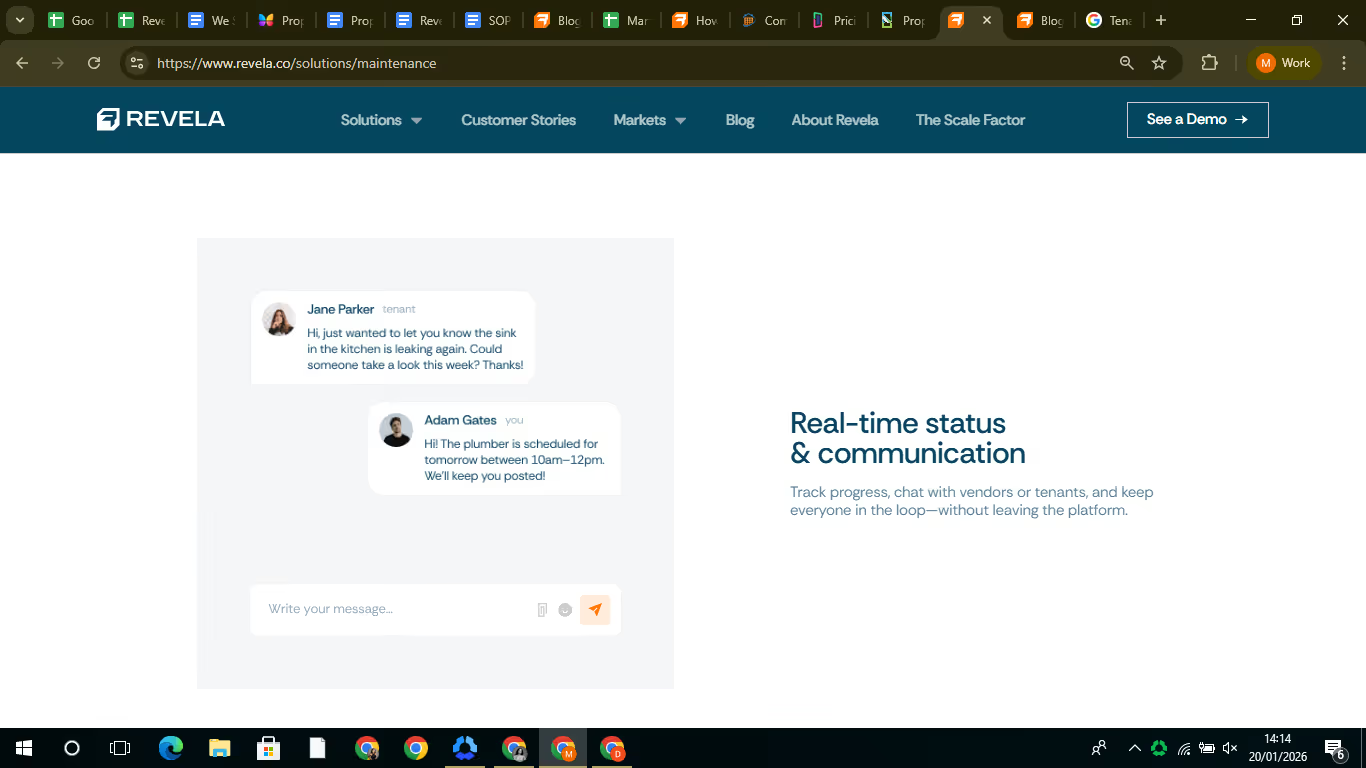
When a tenant submits a request via the portal, the system instantly routes the work order to a preferred vendor based on location and trade. Real-time status updates keep all parties informed, providing managers with 360-degree visibility and eliminating the need for constant follow-up calls.
6. Vendor Coordination and Invoice Processing
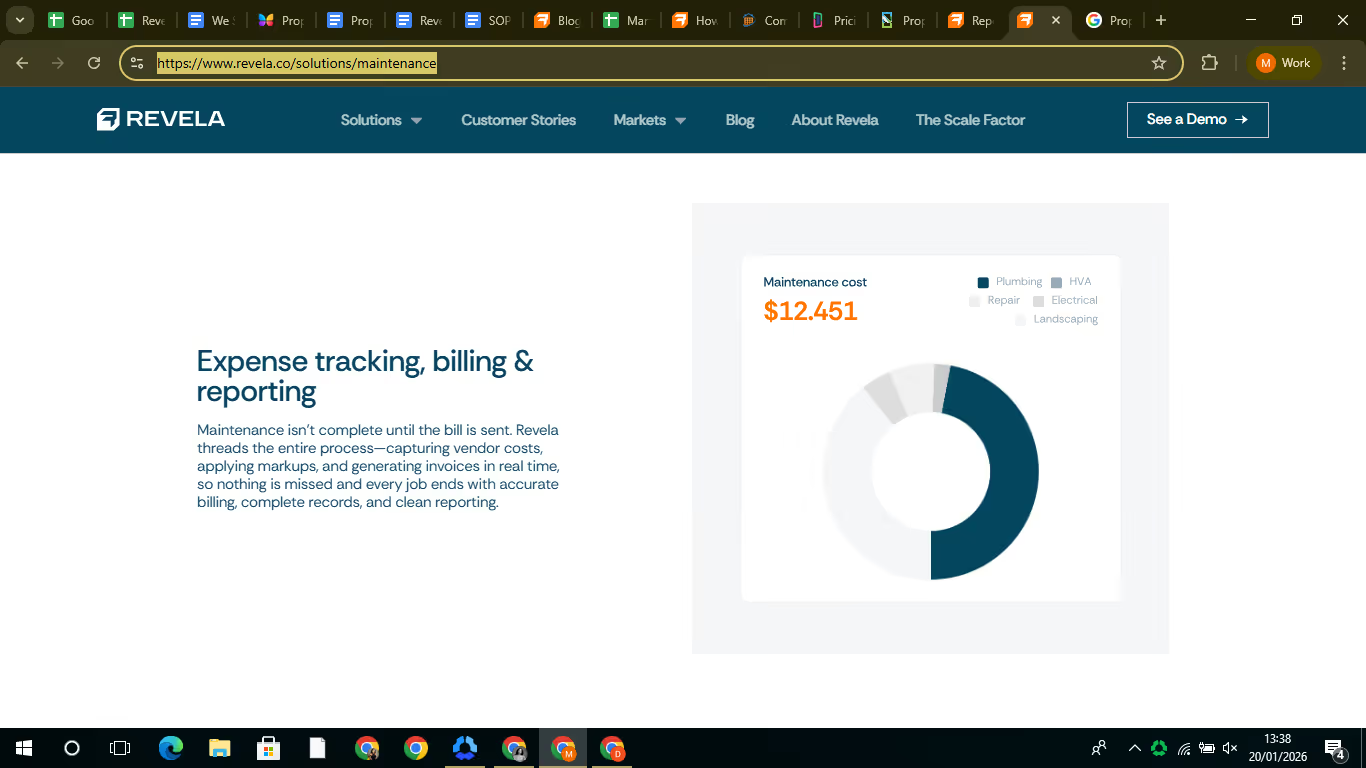
Managing vendors across multiple properties can quickly become messy. Automation brings structure by streamlining communication, approvals, and payments into a single workflow.
When a request comes in, the system routes it to the right vendors, manages approvals based on cost thresholds, and issues work orders with clear access and contact details. Invoices are matched to completed jobs, discrepancies are flagged, and payments are scheduled without manual follow-up.
Over time, performance tracking shows which vendors deliver on cost, speed, and quality. So, you’ll be able to rely on data, not guesswork, when choosing who to work with.
7. Tenant Screening and Application Processing
Manual screening is slow and inconsistent, often introducing unnecessary Fair Housing risks. Automation replaces this bottleneck with an instant, criteria-based engine that runs credit, background, and employment checks the moment an application is submitted.
By standardizing the "pass/fail" process, you ensure total compliance while slashing turnaround times from days to hours. Once cleared, the system automatically triggers lease generation and deposit collection, moving residents from "applicant" to "signed" without a single manual handoff.
8. Vacancy Marketing and Leasing
Vacancies drain revenue, but manual marketing drains your team’s time. Automation solves both by instantly syndicating listings across major networks like Zillow and Apartments.com, the moment a unit becomes available.
Beyond listing, the system acts as a 24/7 leasing assistant: capturing inquiries, routing leads to agents, and nurturing prospects with automated follow-ups. By integrating self-guided tours, complete with secure access codes and automated feedback loops, you can move prospects through the funnel and secure applications without ever needing a staff member on-site.
9. Resident Communication and Notifications
Property managers are often trapped in a cycle of repetitive inquiries regarding policies, payments, and maintenance status. Automation breaks this loop by centralizing every email, text, and portal message into a single, searchable history. This ensures any team member can provide seamless support with full context.
Beyond daily chats, the system proactively sends targeted, scheduled notifications for routine announcements, such as utility maintenance or community events. By automating these baseline interactions, your team shifts from answering basic questions to resolving high-impact resident issues and building a stronger community.
10. Financial Forecasting and Budget Management
Traditional budgeting is often reactive, leaving variances buried in spreadsheets until quarter-end. Automation provides continuous oversight, flagging budget deviations the moment they occur. This real-time visibility allows you to course-correct before small issues impact the bottom line.
Even better, integrated tools let you model rent hikes or capital improvements instantly, providing data-backed recommendations for every possible pivot. Instead of looking backward, your financial strategy becomes a forward-looking engine for growth.
11. Compliance and Regulatory Reporting
Navigating the maze of Fair Housing, trust accounting, and safety codes manually is a high-stakes liability. Automation acts as your compliance safeguard, using centralized calendars to track critical deadlines and renewal dates across your entire portfolio.
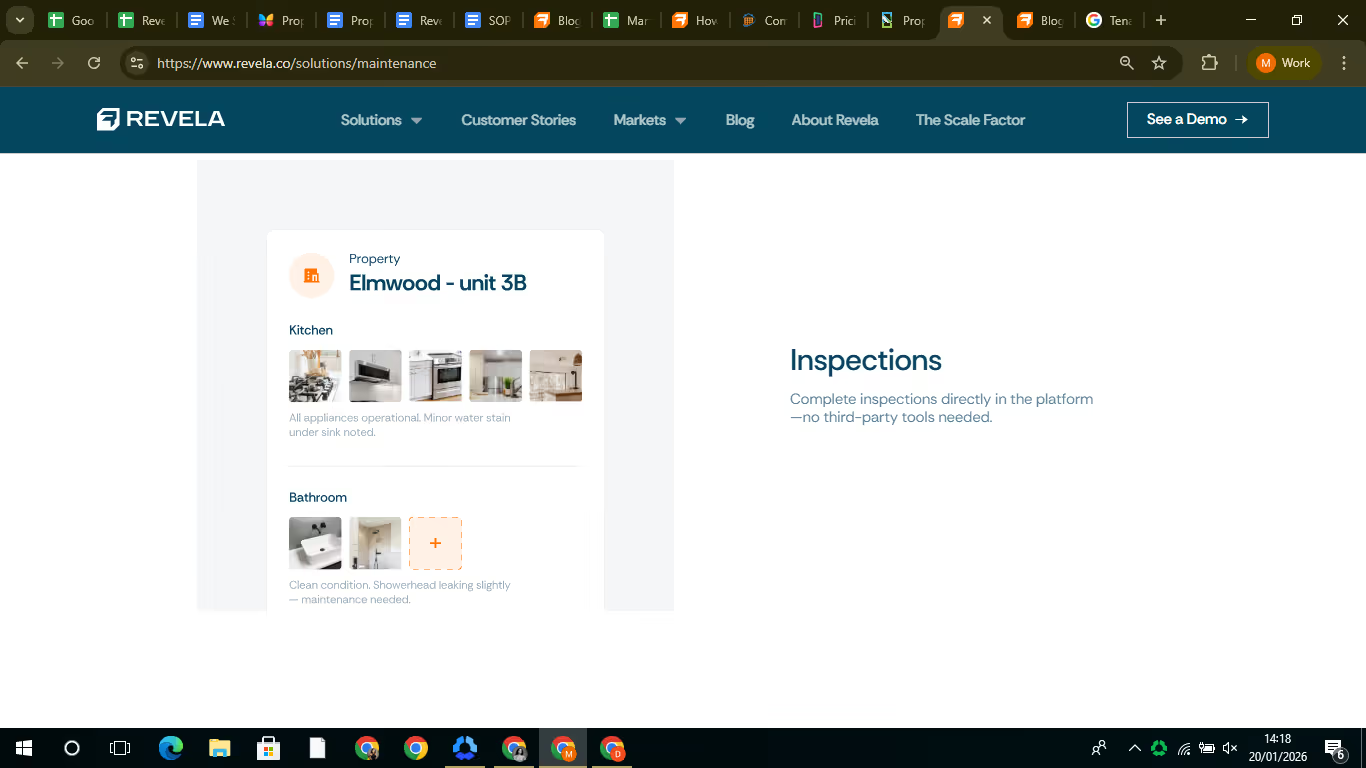
From insurance certificates to business licenses, the system maintains a "ready-to-audit" trail. By automatically triggering inspections and flagging remediation needs before they become violations, you move from reactive damage control to proactive, bulletproof risk management.
12. Task Management and Internal Workflows
Coordinating leasing, maintenance, and accounting via email is a recipe for missed deadlines and team burnout. Automated task systems replace this chaos with "set-and-forget" sequences.
For example, when a tenant gives notice, a chain reaction begins: the system instantly schedules the inspection, lists the vacancy, and initiates marketing. Each task will have a clear owner and deadline. This ensures that recurring responsibilities never slip through the cracks, allowing your team to stay perfectly synchronized without constant manual coordination.
6 Best Property Management Workflow Automation Tools
- Revela
- AppFolio
- Yardi
- Buildium
- RentManager
- DoorLoop
1. Revela
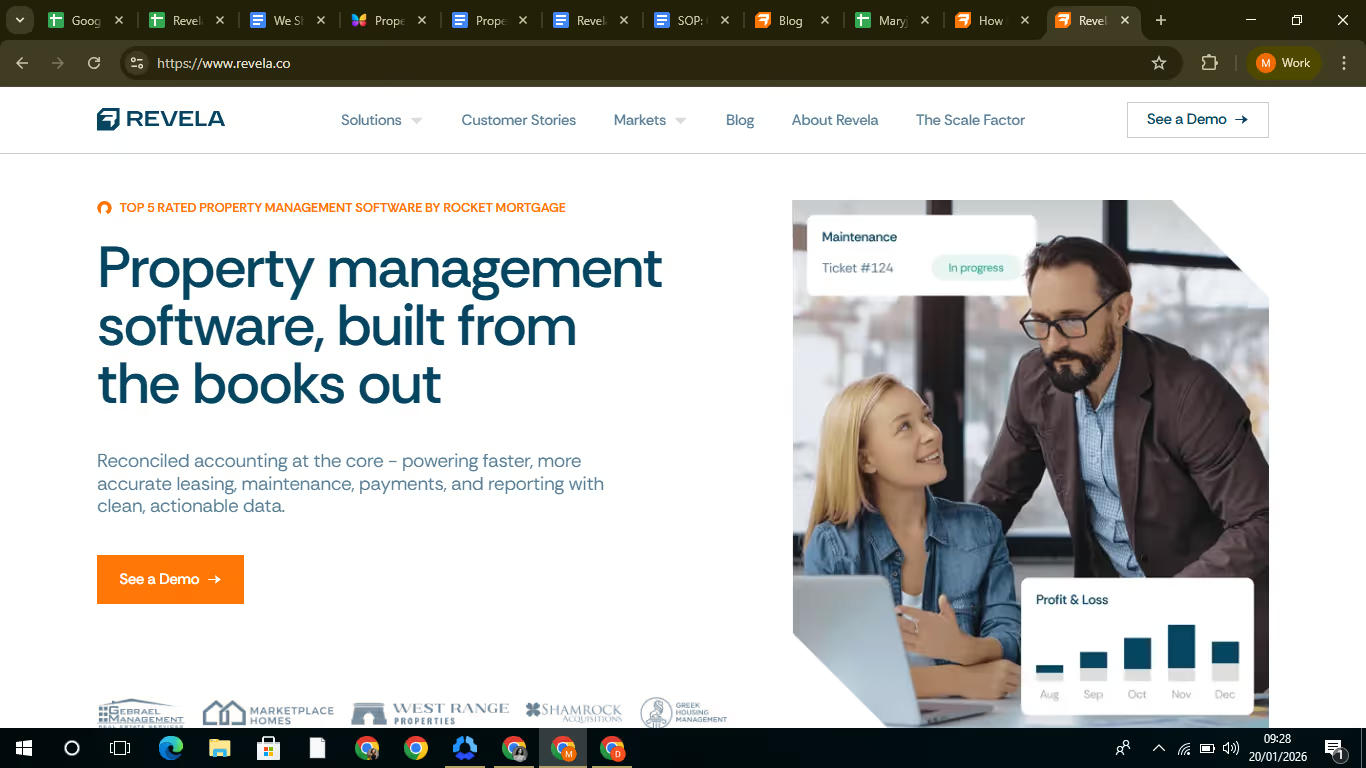
Revela is a property management software platform built ledger-first for property managers who need accurate trust accounting as the foundation for all operations. Unlike platforms that bolt accounting onto existing features, Revela starts with reconciled books and extends that accuracy across leasing, maintenance, payments, and reporting.
Key Features
- Trust Accounting: Automatic reconciliation with separate owner ledgers and audit-ready documentation.
- Real-Time Dashboards: Live cash positions and portfolio performance without manual reporting.
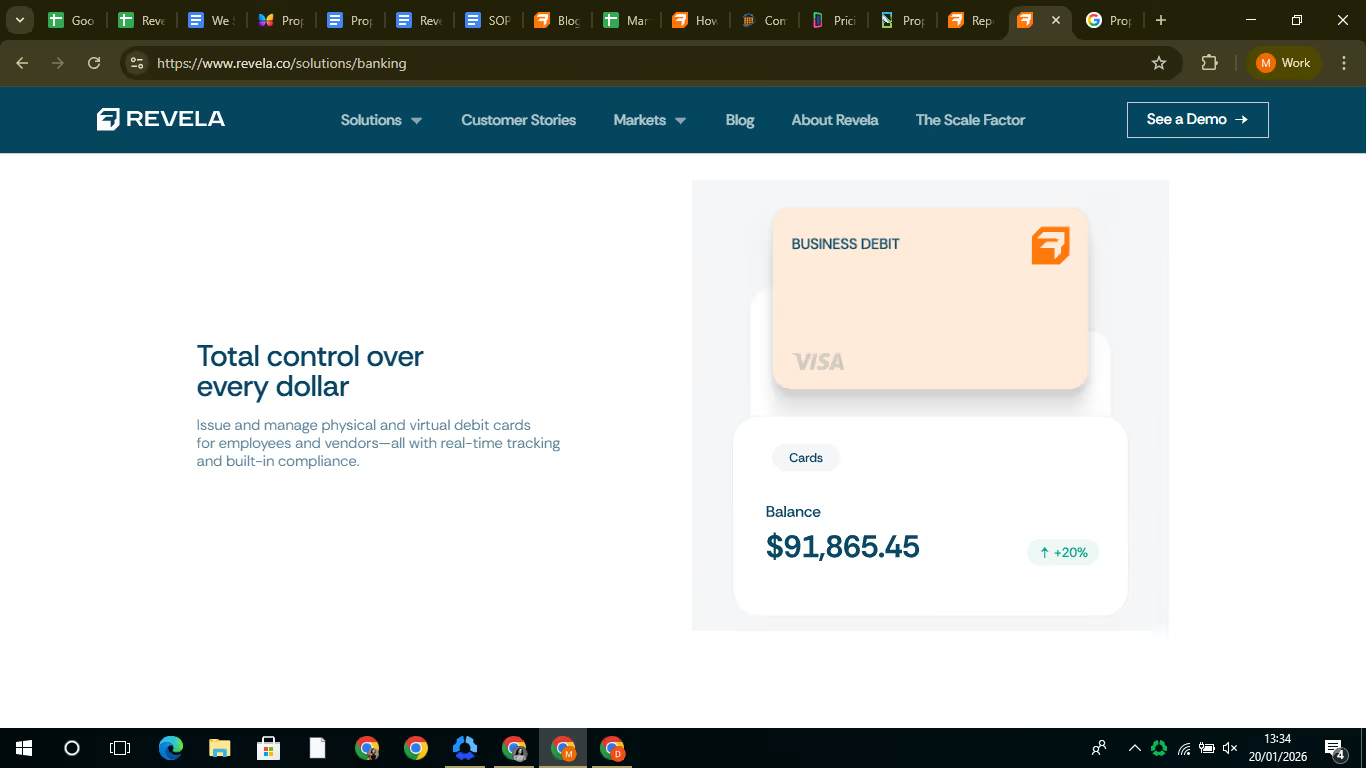
- Embedded Banking: Issue physical and virtual debit cards for vendors and staff. Automate payments and track spending in real-time to keep your ledger accurate and compliant without manual entry.
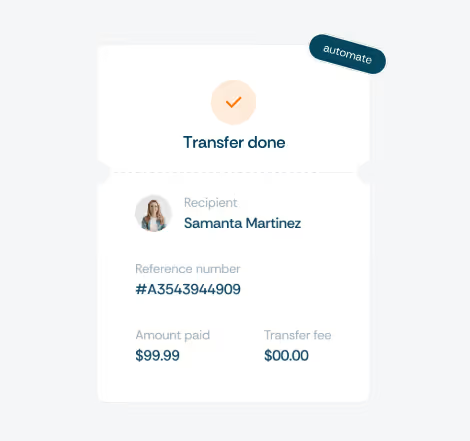
- Maintenance Boards: Visual workflow with vendor routing and performance tracking.
- Open API: Custom integrations with existing systems and specialized tools.
Pricing
Custom pricing based on portfolio size and feature requirements; free demo available.
Pros
- Close books in 2 days, not 2 weeks
- See exact owner cash balances instantly
- One system replaces 3-4 tools
- Support responds under 2 hours
- Team migrates your historical data
Cons
- Requires demo for pricing
Best for: Mid-market to enterprise operators managing 1,000+ units who need institutional-grade accounting with real-time visibility.
2. AppFolio
AppFolio provides comprehensive property management software designed for residential portfolios from small landlords to mid-sized companies. The platform consolidates leasing, accounting, maintenance, and communication into a single system with strong mobile capabilities.
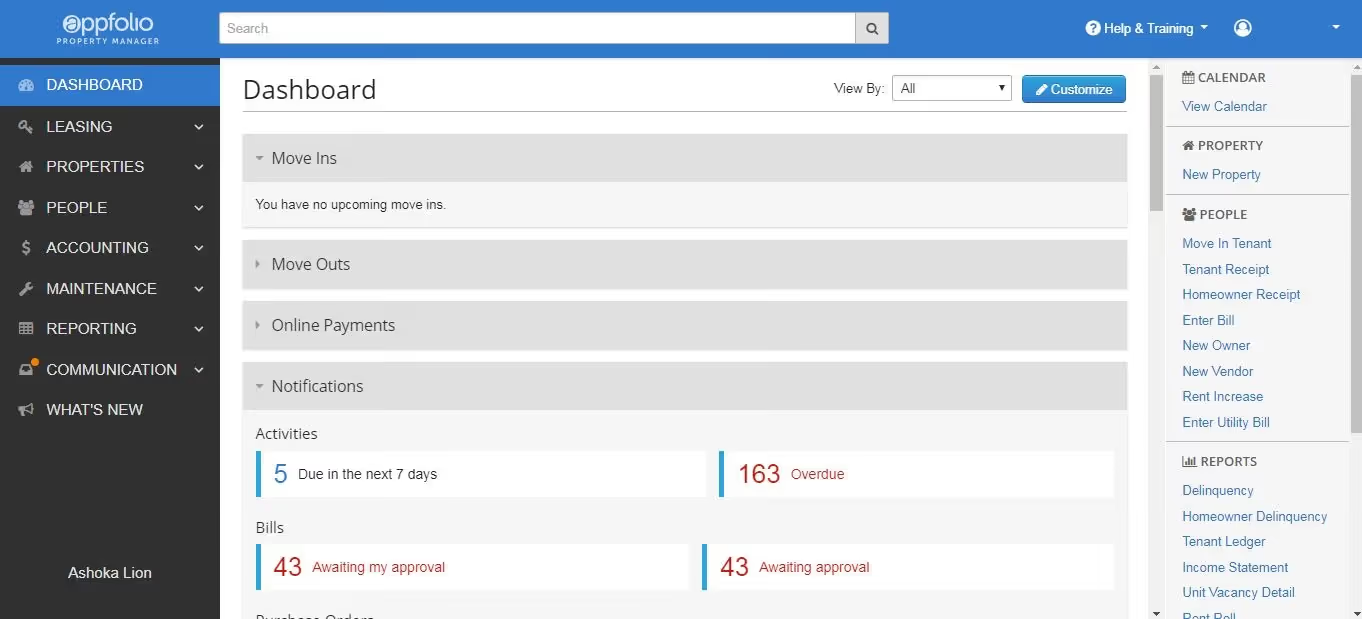
Key Features
- AI Leasing Assistant: "Lisa" responds to prospects 24/7 and schedules tours automatically.
- Smart Maintenance: Routes requests by issue type and assigns vendors by location.
- Bank Reconciliation: Auto-syncs transactions and matches to ledger entries.
- Mobile-First Design: Full functionality on iOS and Android for field staff.
- Vacancy Syndication: Pushes listings to Zillow, Apartments.com, and 20+ platforms.
Pricing
Custom pricing based on units and feature requirements; contact sales for quote.
Pros
- Staff productive in days
- Mobile works like desktop
- Quarterly feature updates
- 100+ tool integrations
Cons
- Accounting lacks multi-entity support
- Costs jump 40% with add-ons
- 24-48 hour support waits
Best for: Property management companies managing 50-2,000 units who want established software with broad feature coverage.
3. Yardi
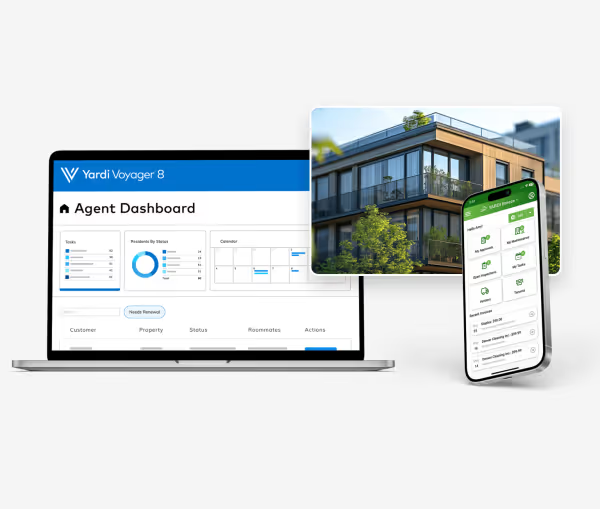
Yardi serves enterprise property management organizations managing thousands of units across diverse property types and complex ownership structures. The platform handles sophisticated accounting requirements, multi-property portfolios, and international operations.
Key Features
- Multi-Entity Accounting: Handles complex ownership with consolidated reporting.
- Global Operations: Supports multiple currencies and international compliance.
- Comprehensive Lease Admin: Tracks critical dates and renewals for thousands of leases.
- Vendor Network: Pre-integrated contractors with performance history.
- Enterprise Reporting: Custom dashboards with investor-grade drill-down capabilities.
Pricing
Enterprise pricing starts around $50,000+ annually for implementation and licenses; actual costs vary significantly based on portfolio size and modules.
Pros
- Meets institutional standards
- Works with major REITs
- Supports all property types
- Connects to any enterprise system
Cons
- 9-12 month implementation
- $50,000+ annual costs
- Needs dedicated admin
Best for: Enterprise portfolios with 2,000+ units requiring complex accounting, multi-property reporting, and institutional-grade functionality.
4. Buildium
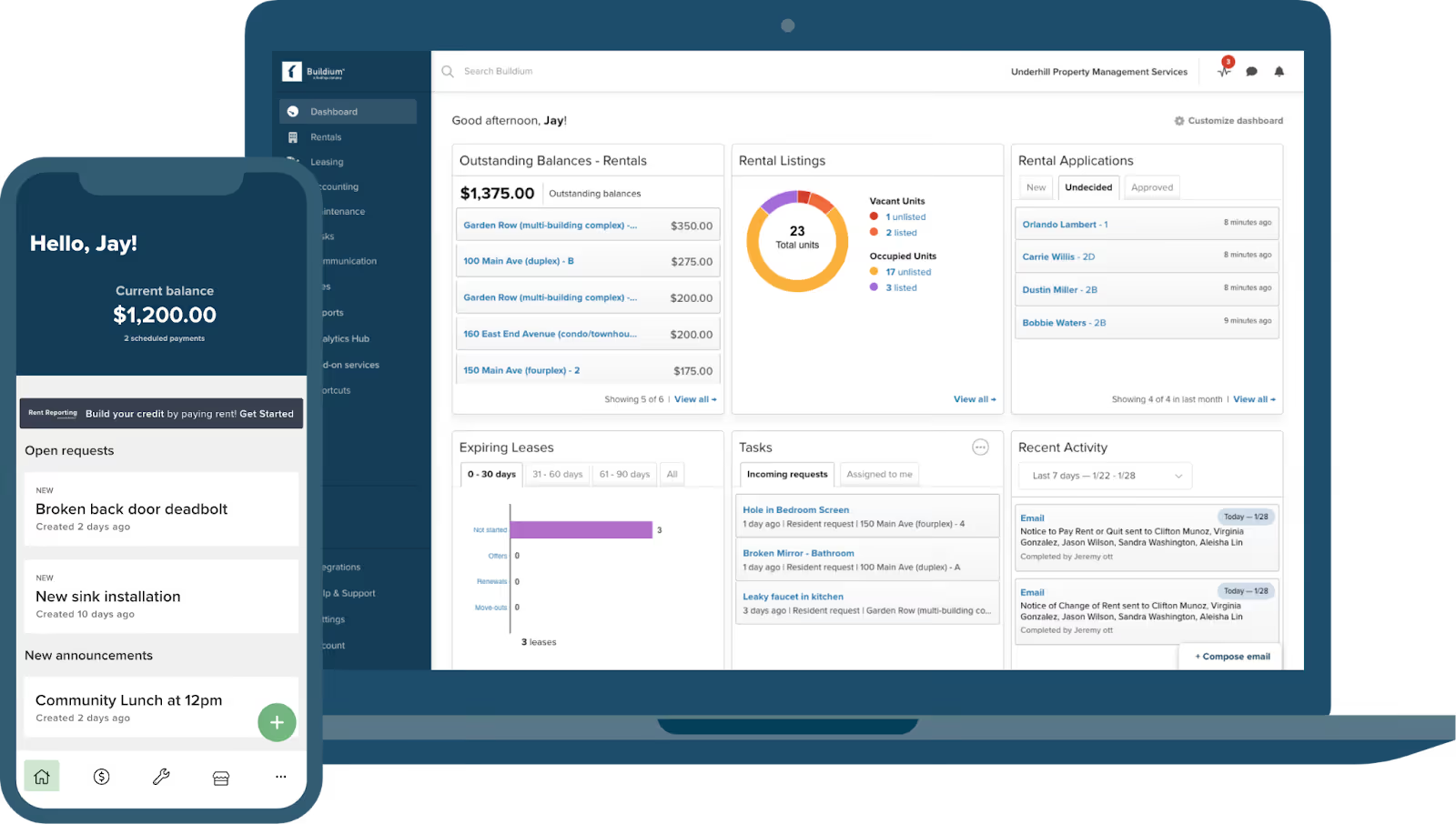
Buildium targets small to mid-sized property management companies with user-friendly software that balances functionality and accessibility. The platform emphasizes ease of use over advanced features, making it popular with companies transitioning from manual processes.
Key Features
- One-Click Rent Collection: ACH and card payments with automatic late fees.
- Integrated Screening: Background checks and credit reports in the application workflow.
- Tenant Portal: Self-service payments, maintenance requests, and document access.
- Vacancy Marketing: Auto-posts listings to major rental sites.
- Basic Accounting: Rent rolls, general ledger, and owner statements.
Pricing
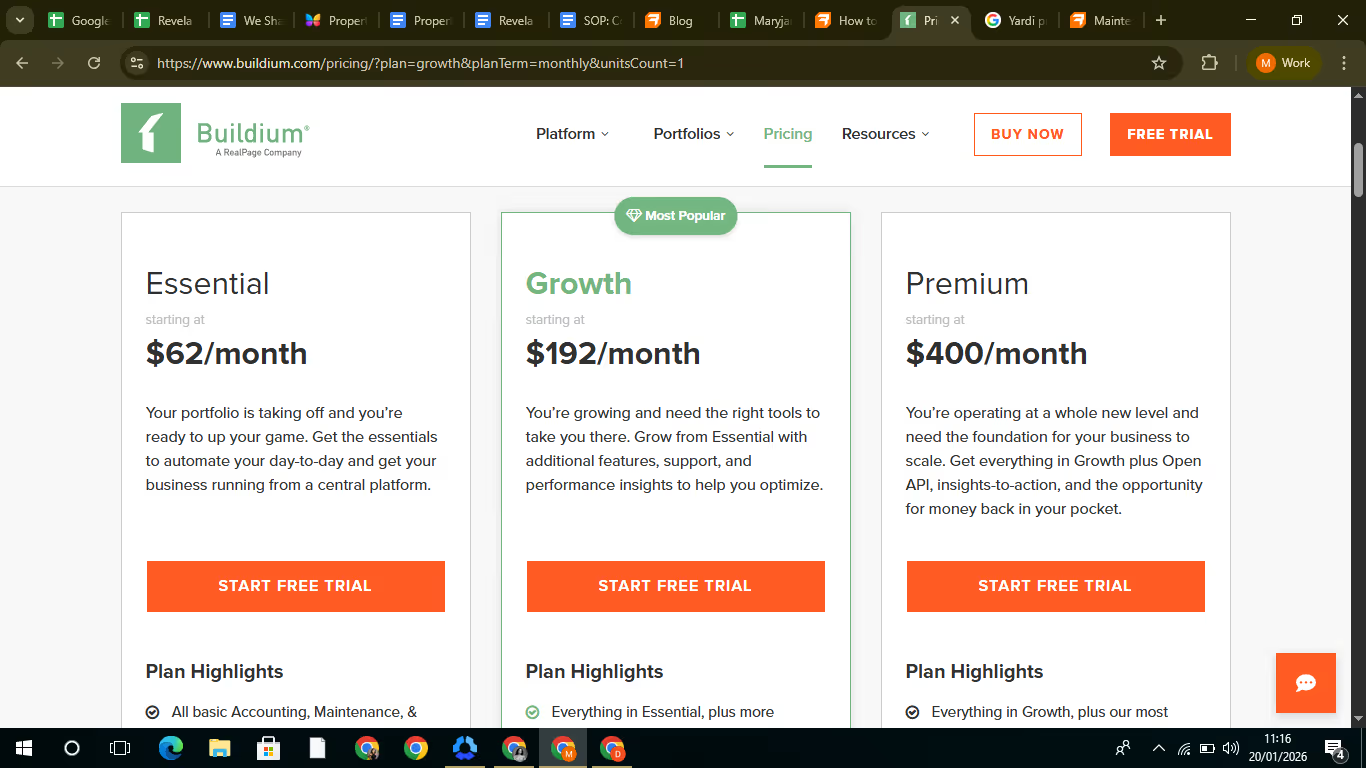
Starts at $62/month for up to 20 units, (Growth plan); scales to $192/month for unlimited units, (Premium plan) to $400/month plus per-unit fees.
Pros
- Low entry cost and transparent pricing.
- 2-4 weeks quick implementation
- Minimal training for basic features
- Responsive customer support
Cons
- Pre-built reports only
- 15-20 integrations max
- Mobile missing key features
Best for: Small property management companies managing 50-500 units who prioritize ease of use and affordable pricing.
5. RentManager
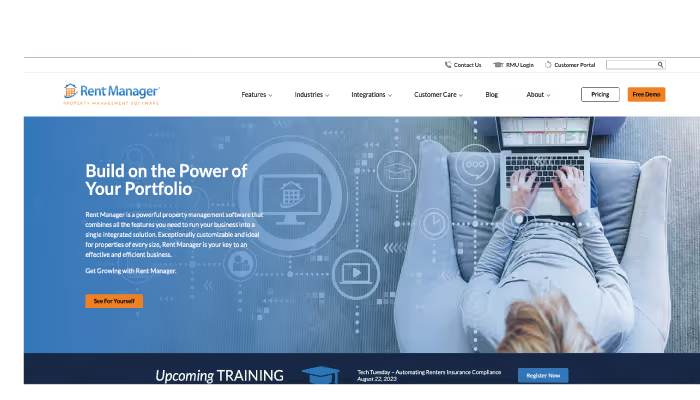
RentManager provides customizable property management software emphasizing flexibility for companies with unique workflows or diverse property types. The platform allows extensive configuration to match specific business processes rather than forcing standardized workflows.
Key Features
- Custom Workflows: Configure approval chains and task routing to match your processes.
- Advanced Reporting: Build unlimited custom reports with 200+ data fields.
- Multi-Property Accounting: Complex chart of accounts and consolidated financials.
- Rule-Based Automation: Set conditions for maintenance routing and late fees.
- Document Vault: Centralized storage with automated retention policies.
Pricing
Custom pricing based on unit count and features; contact sales for a quote.
Pros
- Handles multiple property types
- Unlimited custom reports
- Active user community
- Works for HOAs too
Cons
- Requires technical knowledge
- Limited mobile functionality
- Steep learning curve
Best for: Property management companies with 200-2,000 units requiring workflow customization and flexible reporting across diverse property types.
6. DoorLoop
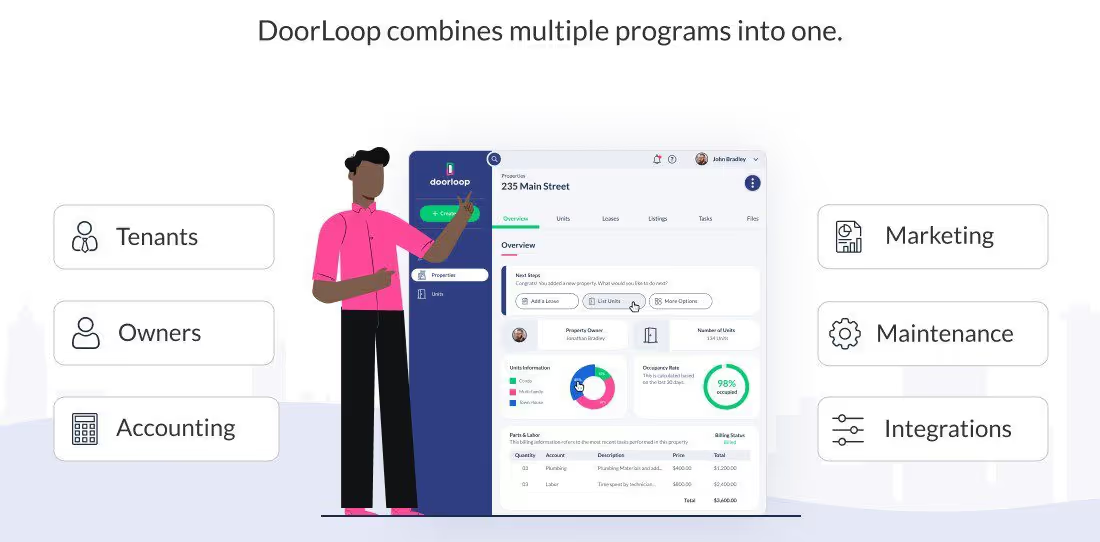
DoorLoop offers modern, cloud-based property management software designed for landlords and small to mid-sized management companies. The platform prioritizes user experience with an intuitive interface and comprehensive automation for residential portfolios.
Key Features
- Multi-Payment Options: ACH, credit/debit, Apple Pay, Google Pay, with transparent fees.
- Bank Feed Sync: Connects to 12,000+ institutions and auto-matches transactions.
- Tenant Maintenance Portal: Submit requests with photos and track status.
- Unlimited E-Signatures: Built-in alternative to DocuSign for leases and renewals.
- Custom Dashboards: Drag-and-drop builder for tracking specific KPIs.
Pricing
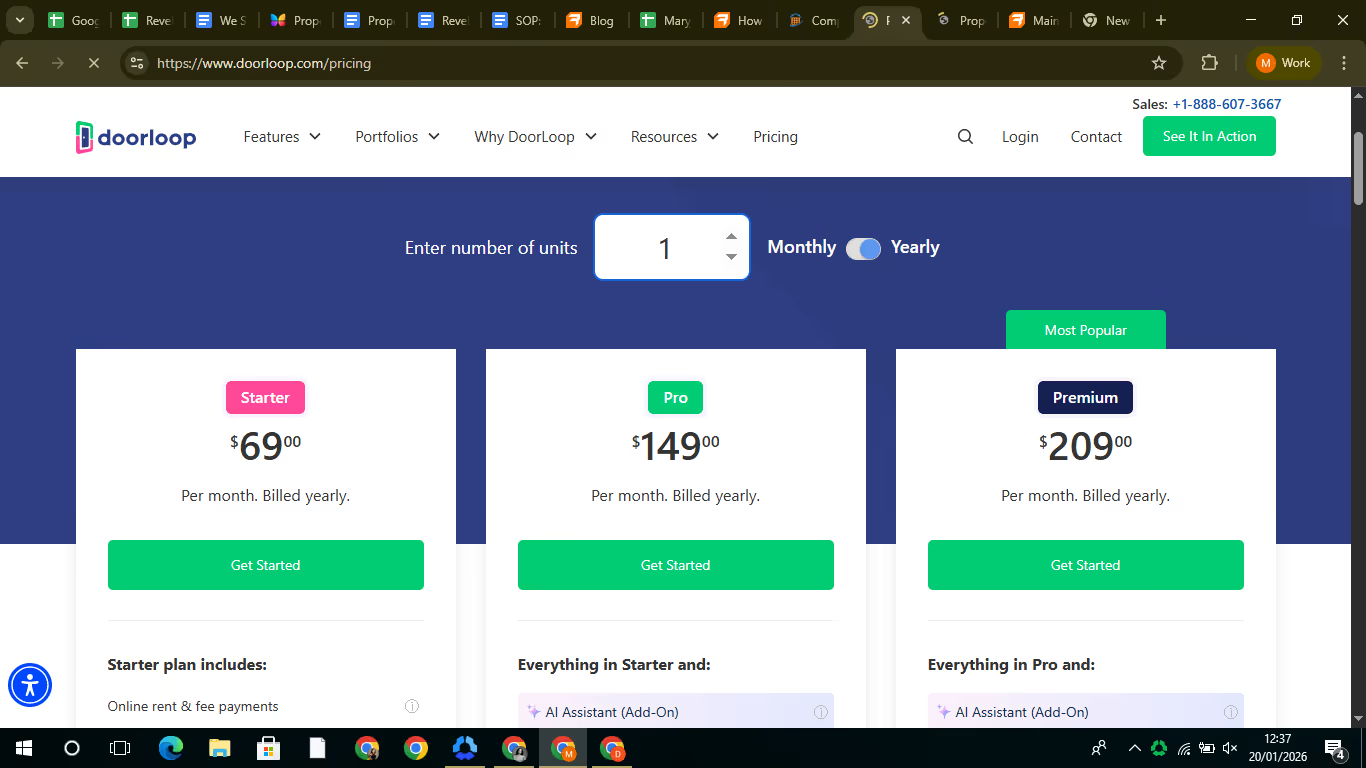
DoorLoop’s pricing starts at around $69 per unit/month (Starter), $149 per unit/month (Pro), and $209 per unit/month (Premium) when billed annually, with slightly higher rates if billed monthly.
Pros
- Modern, intuitive interface
- Live chat support
- Mobile and desktop friendly
- Free ACH payments on Premium plan
- Regular product updates
Cons
- $3.95 ACH fees on lower plans
- Occasional post-update bugs
- Only 25 integrations
Best for: Landlords and property managers with 20-1,000 units who want modern software with strong automation and responsive support.
How to Choose the Right Property Management Automation Platform
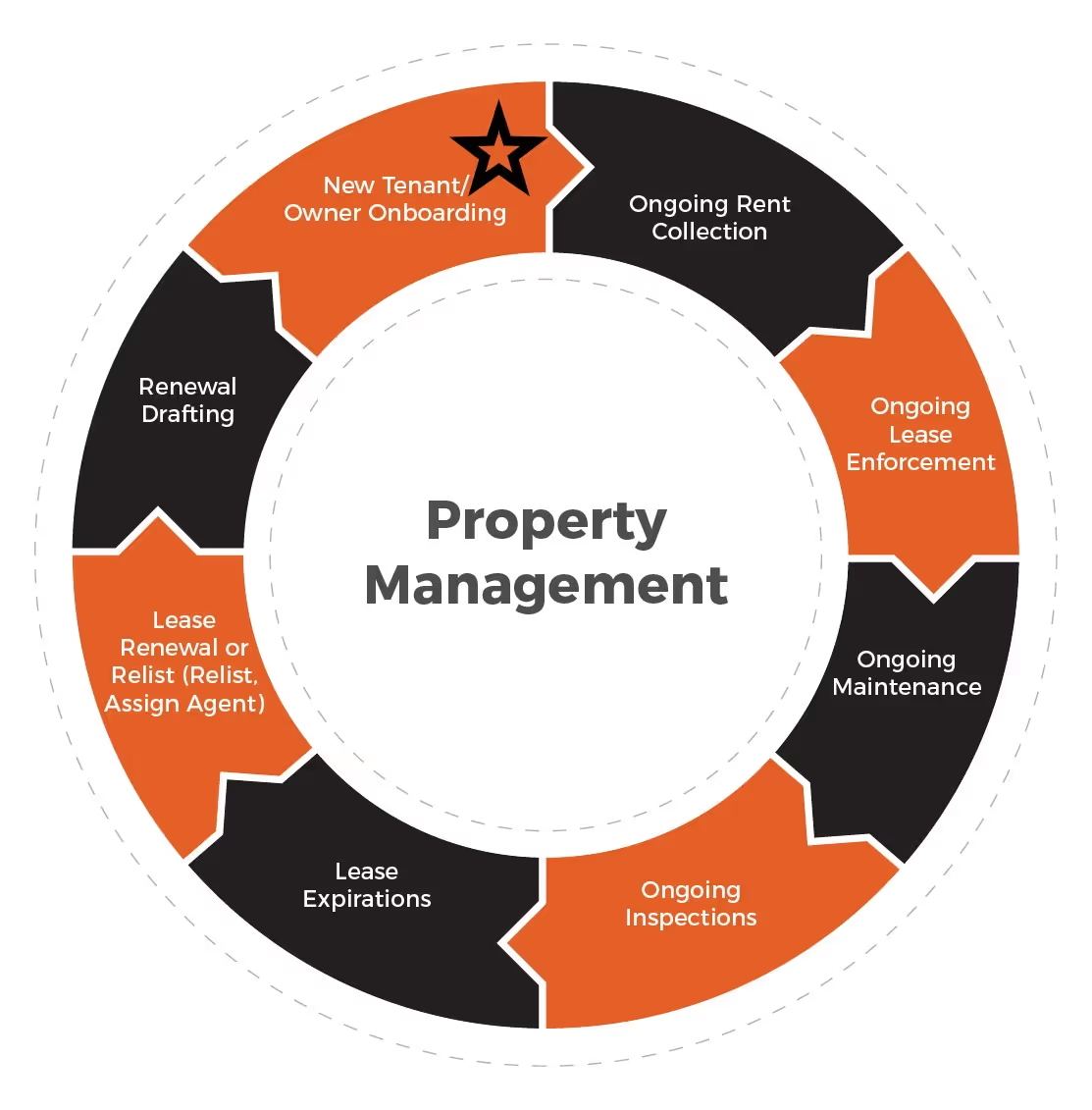
1. Start With Your Real Bottlenecks
Before booking demos, get clear on what’s slowing you down. Let your biggest pain point guide your shortlist.
2. Pressure-Test the Accounting
Don’t accept surface answers. Ask how the system handles real situations—like a maintenance invoice when an owner’s balance is short, etc. Strong platforms explain automated controls. Weak ones rely on manual fixes.
3. Look Beyond “Integrations”
An integration only matters if data moves both ways, quickly. Ask for a live demo that shows real-time or near-real-time sync, not overnight exports or partial connections.
4. Calculate the True Cost
Base pricing is rarely the full picture. Factor in transaction fees, screening costs, API access, and add-ons. A low monthly fee can become expensive once usage scales.
5. Plan for Where You’re Going
Choose software that fits your growth plans, not just today’s portfolio. Switching platforms later can cost months of productivity and stalled operations.
6. Protect Your Data
Make sure your contract guarantees full data exports in standard formats, at no extra cost. Avoid platforms that lock your data behind expensive exit fees.
Common Property Management Automation Mistakes to Avoid
- Automating a Broken Process: Automation won’t fix bad workflows. If approvals or handoffs are already slowing you down, automation will only speed up the problem. Fix the process first.
- Choosing Features Over Results: More features don’t mean better software. A smaller set of tools that work well is far more valuable than dozens that still require manual work.
- Paying the Integration Tax: Too many tools create friction—multiple logins, broken data syncs, and support teams pointing fingers. Fewer, well-connected systems work better.
- Ignoring Team Adoption: Software only works if your team uses it. Training and change management take time, especially for experienced staff. Plan for it.
- Trusting Vague Customization Promises: If a feature is critical and not available today, get timelines and costs in writing. “Coming soon” often means much later than expected.
- Skipping a Pilot Test: Rolling out to all properties at once is risky. Test with a small number of units first, fix issues, then scale.
Find the Right Platform for Your Portfolio
The best property management automation software improves reporting accuracy, eliminates duplicate work, and scales with your portfolio. While many platforms cover the basics, few combine institutional-grade accounting, real-time visibility, and operational efficiency the way Revela does.
Still using disconnected tools or outdated software? Revela gives operators accurate trust accounting, real-time portfolio visibility, and payments in one system. Cut your close time in half, eliminate reconciliation headaches, and make faster decisions. Book your demo today!
Frequently Asked Questions
What is the ROI of property management automation?
Returns vary, but most firms see payback within 12–18 months. Time saved on manual work typically lets teams manage 20–30% more units without hiring more staff.
Can small property management companies benefit from automation?
Yes. While large portfolios see dramatic total time savings, small companies benefit from automation's consistency and scalability. Automation prevents small teams from drowning in administrative work.
Will automation replace property management jobs?
Automation shifts work rather than eliminates it. Instead of manually entering data or chasing late payments, team members focus on resident relationships, owner communication, and business growth.
What should I look for in property management automation software?
Prioritize platforms with strong accounting foundations, comprehensive integration capabilities, and proven customer support. Ensure the system handles your property types and portfolio size.